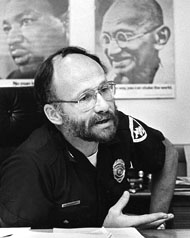

 Back on August 31st, I mined up an old piece I wrote back in the ’90s about the future of policing called, “A Note From A Cop the 21st Century.” Primarily it was about the workplace, the new leadership, the autonomy given to community-based police officers and the existence of leaders who used collaborative, team-style leadership — no more of the top-down coercive style. I wrote that over 20 years ago and tried to envision a grand future for police officers. Or so I thought. The coercive model still exists and still is the dominant way of leading. Most police academies still look more like “boot camps” than institutions of higher learning.
Back in the days when I was hard at work to diversify the police department I led (Madison, Wisc.), some of my officers (and even citizens) would complain and ask me “how many more?” — how many more blacks, Asians, Hispanics, gays, and lesbians was I going to hire? To answer that I would ask them if they had recently visited a fourth-grade classroom in our city. I said that because I had been watching the elementary school in my neighborhood. My two youngest children are five years apart in age. The youngest was white and his sister of Asian heritage. When my youngest daughter attended the school, she was the only minority child and we were able send her to a more diverse elementary school. Five years later, when my youngest son became a fourth-grader, he was in the minority — over 1/2 of his class were students of “color.” A big change in five years.
This fact that I shared with my officers soon convinced them to add this to our vision statement: “Diversity is our strength!” (to counter an attitude detected among some in the community that diversity was a weakness, not an organizational strength.)
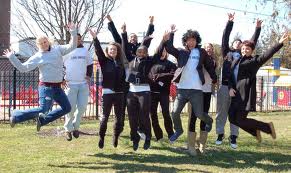
So when a friend of mine alerted me to the “Generation – WE” video” I knew that this was a good example of the ind of community my 21st century cop would be working with and for. I think it’s important that all of us who are “baby-boomers” or older, watch this video and think about it and what it means to our future together.
On the Generation WE website , they describe themselves as “millennials;” the largest generation in American history. Born between 1978 and 2000, and 95 million strong (compared to 78 million “baby boomers”). They are independent—politically, socially, and philosophically—and are about to spearhead a period of sweeping change in America and around the world. (Whether you voted for Obama or Romney, the demographics from last week’s election ought to get you to think about what happened.)
No one knows the millennials like Eric Greenberg. In his book, Generation We, (2008) Greenberg explains the emerging power of the Millennial Generation, shows how they (and their supporters from other generations) are poised to change our nation and our world for the better, and lays out a powerful plan for progressive change that today’s youth is ready to implement.
A competent, smart, educated police will be able to respond to and enlist the support of this generation and everyone else. The police, must do this in a highly engaged and competent manner. And to do so will require great listening skills, problem-solving ability, competence, openness, honesty, and fairness from today’s (and tomorrow’s) police.

 Improving Police: A Necessary Conversation
I don’t know how many of these Generation WE are better educated considering the fact that the politicans, rich people, and corporations have been cutting back on education for the last 30 years? They do not want an educated workforce that can think and question authority as the late comedian George Carlin pointed out particulary when kids questions their parents’ authority..
Nowadays, colleges are look up as cash cows for businesses in terms of student loans and R&D research for corporations. Many college teachers spend more time doing their own private work instead of actually being teachers and leaving the gunt work to their student assistants plus many college teacher are being turn into part time teachers, with no chance of job security and tenture.
These kids need political power but the rich people and corporations will do everything they can to prevent it plus many rich Generation We kids have the same racist, sexist, anti-worker, anti-union values that their fathers, grandfathers, and great grandfathers had.
I don’t expect the police of today and tomorrow to work with this new generation just like they did not work with past generations of progressives, liberals, socialists, and union labor activists.
LikeLike
I have noticed you reaching out on blogs where activists tend to go who are seeking police reform so I assume you want our participation. I will give it a go.
I haven’t read all of your blog or anything like that. I read this piece so far.
I have to say that to some extent, decentralization of authority under community policing has had quite a lot of disastrous effects when you have a situation where discretion tends to be abused more often than not. It just allows abuse of discretion by front-line police officers to go unchecked.
I have supported community policing because it is well established and developed now and can be better than alternatives but I think it is well below the mark.
Let’s face it, it still emphasizes otherness – it is a “partnership” between the community and police.
Also, the education of police — as you pointed out in your blog post — is still a boot camp meant to inculcate military order. Military order tends to exist in organizations where people’s lives and safety are at stake in the course of duties so it is understandable but there has to be a way to modify this because the downside is rather glaring and intolerable.
I am of the mind that we need dramatic reforms in policing nationwide. I don’t believe tune-ups are going to do it. I wonder if you feel the same way. — Do you have a platform for reform you can share with us or, if already published, point to?
LikeLike
Jane, thanks for getting back to me. You are on target with what you say. Community policing won’t work unless the police who work there are smart, well-trained, honest and respectful. Basically, that’s what i learned. If you are able to hire good people and train and lead them in an adult manner, they turn out to be good cops. My position after 33 years in the business and then another two decades as a peace and justice worker, is reflected in my new book, Arrested Development: A Veteran Police Chief Sounds Off About Protest, Racism, Corruption and teh Seven Steps Necessary to Improve our Nation’s Police. You can find it, and peruse it, on Amazon, both paperback and digital, by clicking HERE. Thanks and do keep up the commentary!
LikeLike
As an ex community Officer in the late eighties I can say that in my force we had all the attributes that they say they desire today … but without the constant interference from Senior officers trying make their mark nor politician’s doing likewise who often see problems where none exist.
Diversity in terms of representation of ethnic mix is to be lauded but not when different standards are applied to make this utopian dream come true immediately, (often creating different problems in their own right) these things must be allowed to develop over time.
What Britain’s Police need more than anything right now is a lengthy period of stability not constant change … Change doesn’t always mean progress regardless of what politicians may say.
LikeLike
What I would like to see is at the police academies is where the cadets are instill with the discipline that the Bill of Rights and the US Constitution are meant to be obey and not look upon as pieces of paper that are to be ignored or should be thrown in the trash can. Of course, it doesn’t mean a thing if many (too many in my opinion) old time cops at all levels of the police ranks keeps infecting the new cops with their attitudes and the new cops can’t do anything about it whether they are at the academy and/or on the streets.
LikeLike
Thanks, as I read more of your blog I stumbled on the book and descriptions of a platform for change. I’ll read up. I care about these issues.
LikeLike