Part Four: Getting Back on Course The good news about drift is that it can be reversed. A ship that … More

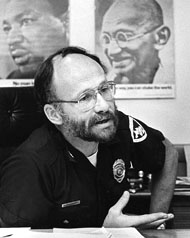
A veteran police chief committed to improving police leadership, trust, effectiveness, and officer safety.
Part Four: Getting Back on Course The good news about drift is that it can be reversed. A ship that … More

Part Three: What Should a Leader Say? After a fatal police shooting, most chiefs reach for the same script. They … More

Part Two: What is Institutional Drift? Navigators have long worked by a rule of thumb called the one-in-sixty rule: a … More

Part One: Can a Good Police Department Lose Its Way? I have spent more than sixty years in and around … More

Our nation’s founding document does not begin its famous list with liberty. It begins with life. “Life, liberty, and the … More

Quality Cops Start With Quality Leaders The New Quality Leadership Workbook for Police: Leadership and Improvement Methods This workbook grew … More

How to Rate Your Local Police: A User’s Guide for Civic Leaders, Governmental Officials, Concerned Citizens, and Police My earliest … More

American Policing Doesn’t Have to Stay Arrested Part memoir, part Madison history, and part policy handbook, Arrested Development draws on my more … More

Rethinking the Rules of Engagement: Moving Beyond Graham v. Connor The legal baseline for police use of force in the … More

The Stanford Law School Model Use of Force Policy explicitly addresses the core limitation of Graham v. Connor (1989): that Graham establishes only the constitutional baseline of “objective reasonableness“—a … More

