

 Last Friday, I talked with Fredericka Fryburg on the Wisconsin Public Television show, “Here and Now” about Ferguson, its causes, and police response.
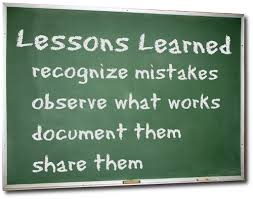
As tragic as the Ferguson matter remains, I am hopeful that we all will learn something from it.
CLICK HERE to view my remarks.
Along with me was Noble Wray, who was my assistant before I retired and became chief of police ten years ago, and recently retired. He now serves as interim president of Madison’s Urban League. His remarks can be seen HERE.
So far, these are the lessons (so far) that are to be learned and acted upon:
- Police departments in every American city will have to be diverse, well-trained and educated, controlled in their use of force, honest, respectful, and strongly connected with those whom they serve. Additionally, they must be in a continual and on-going process of building trust which leads to community support and safer neighborhoods.
- The initial response to protest and disorder by police needs to be “soft” and not present an overwhelming show of force and military hardware. (We learned this in Madison and it has worked for years. Recently, Prof. Clifford Stott conducted research for police in the U.K. which empirically validated the method. See HERE and my blog HERE.)
- In every situation in which a person is shot and killed by police and the body is in public view, all efforts must be made to cover and treat the body with care and attempt to have a sensitive and compassionate conversation with onlookers, particularly friends and family members.

 Improving Police: A Necessary Conversation
Refreshing and insightful the perspective of these two retired chiefs.
LikeLike
Chief, As always, very interesting comments. You are dead-on with your assessment of the value of establishing relationships. Selling “who we are”, not “what we do.” needs to be our primary objective. While I don’t agree that officers in a vest are necessarily seen as robots, you are correct in that they are not seen as people. We can blame a culture that demonizes the police, or the media that over-hypes everything bad for the sake of ratings; but ultimately we also have to look at how we portray ourselves and the culture that we build from within.
LikeLike