Published by David Couper
I served over 20 years as the chief of police in Madison (WI), four years as chief of the Burnsville (MN) Police Department, and before that as a police officer in Edina (MN) and the City of Minneapolis. I hold graduate degrees from the University of Minnesota and Edgewood College in Madison. I have written many articles over my years as a police leader. After retiring from the police department, I answered a call to ministry, attended seminary, and was ordained as a priest in the Episcopal Church. After almost 30 years serving in and leading two Episcopal Churches in the Diocese of Milwaukee, I am "sort-of" in the process of retirement. Life is good.
View all posts by David Couper
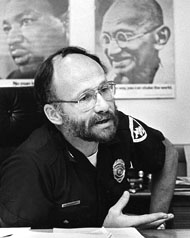
 Let us never forget that restraint is an important part of policing a democracy.

 Improving Police: A Necessary Conversation
While I think we all agree that restraint in the use of force is generally admirable, this clearly isn’t how we want police to respond to this type of situation. The last thing we want officers thinking about during a critical incident is what the media and others will say afterward. We want cops focusing on protecting others and themselves by stopping the threat in accordance with agency policy and their training. Certainly, it’s ideal when a critical incident can be safely resolved without deadly force. However, that decision should be based on professional confidence that the objective can be achieved with a lower level of force, and not on concerns about being second-guessed by the chattering classes.
LikeLike
I agree, Ashley, but the problem today perceived by a significant number of people is not restraint but what is believed to be a disregard of human life. There’s a balance here. It’s not easy and that’s why we need good cops on the street. (For my definition of good cops I invited the reader to peruse this blog.)
LikeLike
Chief, as usual, you’re correct. However, I believe that to change those public perceptions, we need to continue working to educate our communities about the realities accompanying legitimate use of force. We as a profession have failed in recent months by allowing voices like Pete Kraska, Radley Balko, Kara Dansky, and Tom Nolan to be the only ones heard by the public. If we fail to define ourselves to the communities we serve, then we shouldn’t be surprised when the anti-police extremists do it for us.
LikeLike
Absolutely. What holds us back? What prevents us from having an open, honest and heart-felt dialogue with our communities? We’ve never done that before? That’s right — but we need to do it NOW!
LikeLike