
[The excerpted article below comes from a November 28, 2923 story in the New York Times by Natasha Frost, reporting from Auckland, New Zealand.]
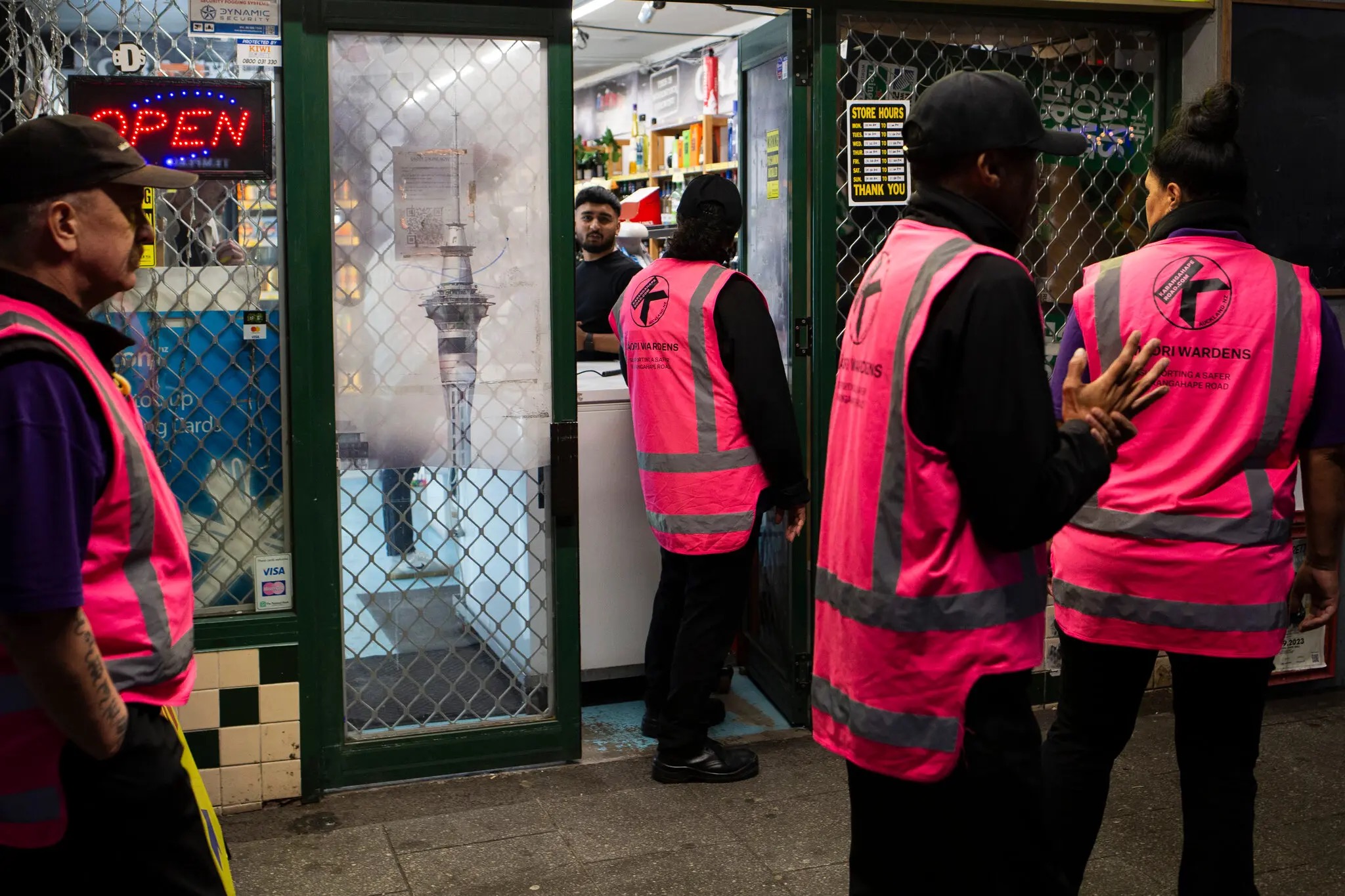
Maori Wardens, a group of Indigenous volunteers, patrolling the streets to check on store owners and residents in Auckland, New Zealand.Credit…Cornell Tukiri for The New York Times
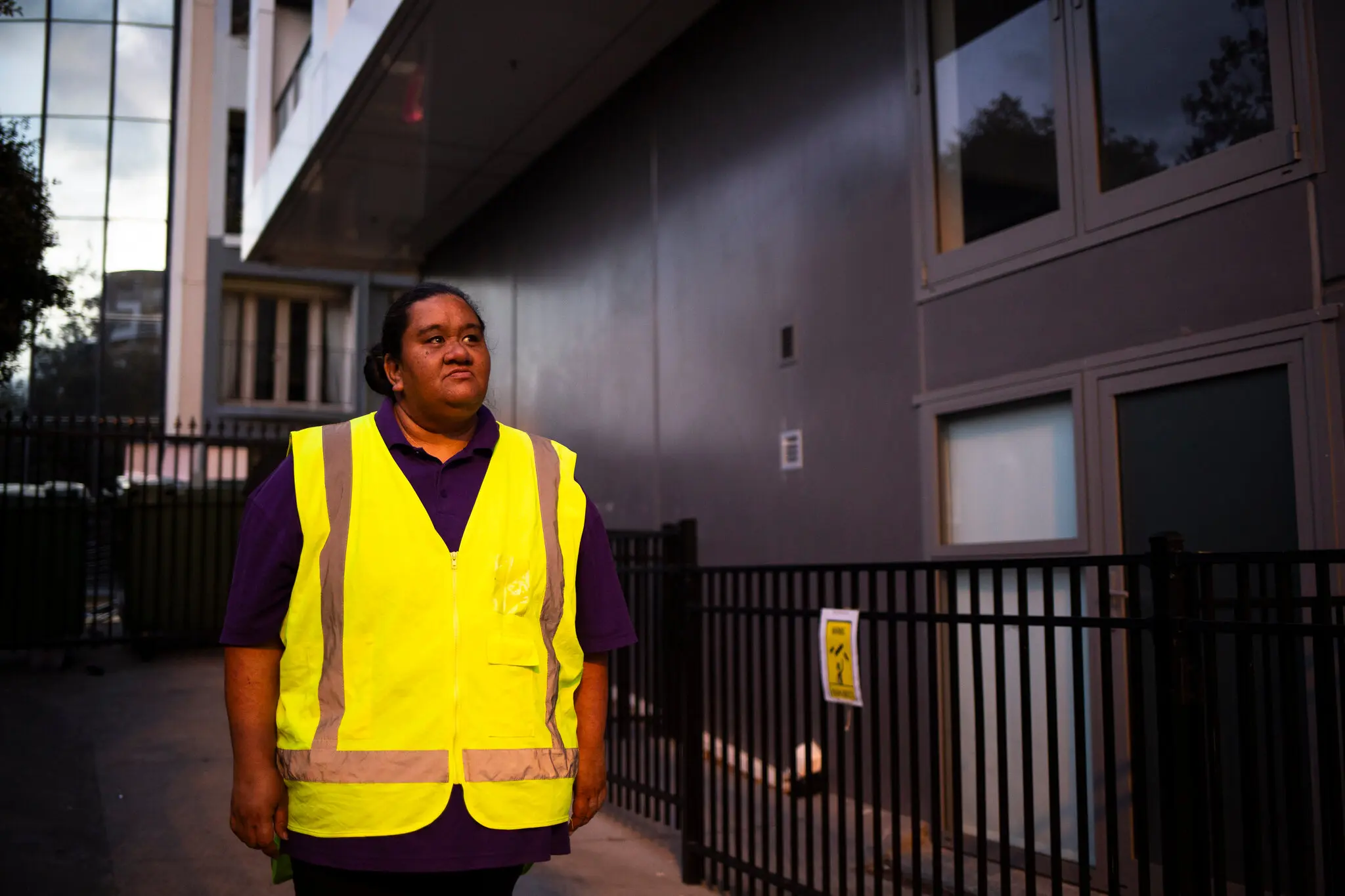
Maori Wardens like Joanne Paikea favor respect and compassion over more forceful coercion.Credit…Cornell Tukiri for The New York Times

A member of the public greeting Ms. Paikea during her walk with Maori Wardens.Credit…Cornell Tukiri for The New York Times
In New Zealand’s Crackdown on Crime, What Part Can Maori Wardens Play?
The strategies used by the Indigenous community policing alternative are in stark contrast to more muscular tactics pitched by the incoming government.
________________________________
“As tempers flared on a recent evening in a nightlife district in Auckland, New Zealand’s largest city, Joanne Paikea sensed an altercation — or even an arrest — brewing.
“’Bro, you know the cops are behind us,’ she said, describing her efforts to soothe the surging tension between two groups. ‘So you’re either going to listen, or get arrested. It’s your choice. What do you want? To go home and have a feed, or get in the cells?’
“Ms. Paikea is a Maori Warden, one of about 1,000 Indigenous volunteers across New Zealand who minister to the vulnerable, calm the vexed and occasionally intervene with the violent, working independently of — but in tandem with — the police.
“The role of policing has recently come under the microscope in New Zealand, where lurid crime stories have dominated headlines. Shootings, gang tensions and scores of ram raids — when miscreants smash into stores with cars to loot them — have rattled the peaceful nation and became an important issue in last month’s election….
“Many countries are wrestling with practical and philosophical questions about law enforcement, including the threat of police brutality, the harms of incarceration and the factors that drive offenders. The likes of the Maori Wardens, who have been active in New Zealand for around a century, can present compelling alternatives for managing low-level crime…
“’We want people to feel at ease with us,’ said Garnet Wetini Weston-Matehaere, a Warden. ‘Our magic tool is our mouths…'”
___________________________________
As a long-time police practitioner and commentator, I am always pleased to see examples of experimentation in the art and craft of policing a diverse democracy. Unless police try new approaches when old one’s simply are not working, we can expect little in the improvement of policing techniques and strategies.
For example, when I was chief in Madison, we wanted to experiment with some new ideas — decentralization of patrol and investigative functions, along with challenging the “top-down” nature of command — even rank and military uniforms (as I had done when earlier when leading police in Burnsville, MN. Our Madison experiment became “The Experimental Police District” in a very diverse area of the city. And, yes, it worked. The city developed five precinct stations in a city of under 300,000 population. We could have never accomplished this without this experiment.
Doesn’t it make sense? To try out new ideas and ways? This is what smart policing is all about: educated cops, making decisions based on data, trying out new ideas, and working to continuously improve all that they do.
Another example, In handling the frequent political demonstrations in our city over the years, we frequently used citizen “monitors” to help us keep the peace. That, too, was an experiment that became a practice.

 Improving Police: A Necessary Conversation