

To Pursue or Not?
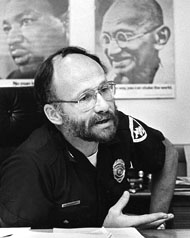
[Note: I am posting a trending note today from Chuck Wexler, Executive Director of my professional organization, The Police Executive Research Forum in Washington, DC. Chuck takes on a most urgent topic (and one that has been overlooked over the years — “When (and when not) should police pursue a fleeing motor vehicle?” In my early days, we knew this was a problem — it was dangerous not only to the communities, but also for our officers. One of the first things I did when I came to Madison, was to put into policy (and revamp training) that the dispatch sergeant had the authority to terminate a chase. I knew, as a street cop, thet none of us would never stop pursuing, pumped with adrenaline, until we caught the guy! And that was dangerous to officer and public safety. The below article (and its links) should help leaders in making the important policy and training decisions regarding police pursuits. (BTW: This issue also applies to foot officers — when is the danger to the officer great than the reason a foot chase begins?) The highlighting is mine.]
Fatal Police Pursuits
Police agencies should only pursue when two conditions are met: (1) a violent crime has been committed and (2) the suspect poses an imminent threat to commit another violent crime.
The Police Executive Research Forum
“Police chases are nothing new – they’ve been around since the first patrol car and are in almost every movie or tv show about policing. But there’s a growing consensus nationally of the danger inherently associated with a high-speed chase, for the officer, the suspect, and the public. And there’s a growing sentiment that the risk is not outweighed by the benefit of catching subjects, except in more extreme cases.
“This week the San Francisco Chronicle published an extensive investigationinto injuries and deaths caused by police pursuits. ‘At least 3,336 people were killed as a result of police pursuits throughout the U.S. from 2017 through 2022,‘ the Chronicle wrote. ‘At least 15 of them were officers. More than 52,600 people were injured from 2017 through 2021, according to government estimates.’
“The Chronicle reviewed a selection of these cases in depth, finding that ‘of the 1,877 people killed in these cases, 1,562 of them died in pursuits initiated over traffic infractions, nonviolent crimes or no crime at all. Just 1 out of 15 people killed in these cases were drivers chased over a suspected violent crime.’
“In recent weeks, the Kansas City Staralso published a detailed series on fatal police chases in their region, finding that ‘across the Kansas City metro, many police departments allow officers to pursue cars for any violation, at any time – with devastating consequences. More than 320 people have been injured in the last five years, and several have died.’
“I wrote about this issue in Septemberwhen PERF released its guidance on vehicular pursuits. PERF’s recommendation is that agencies only pursue when two conditions are met: (1) a violent crime has been committed and (2) the suspect poses an imminent threat to commit another violent crime. These investigations indicate that there is a pressing need for agencies to understand that policy matters; without strong restrictions and training, we will continue to see needless fatalities” (From “PERF Trending,” March 2, 2024).


 Improving Police: A Necessary Conversation
Any police pursuit that ends with a fatality is tragic.
Unfortunately there isn’t a viable solution to prevent a person driving away from a police vehicle stop. If there is a Zero tolerance pursuit policy, where the police can’t pursue except for the most heinous of crimes, what would cause a person to stop when pulled over by the police? The fact would be that the person would only have to outrun the “will” of the police to get away with whatever law they violated. Then why would anyone have to obey Vehicle & Traffic laws or criminal laws when all the have to do is make it to a vehicle and don’t stop for the police.
Who’s fault is it when a police pursuit ends tragically? Does the officer taunt the offender into a pursuit? Does the officer say, “Come on I know what you’re thinking, go for it. I’ll give you a 15 second head start. If I can’t catch you in 5 minutes, I’ll call it off, I promise”.
Of course the pursuit isn’t the officers fault, but why doesn’t the OFFENDER receive 100% of the blame? Why because the Police Department, the Municipality, and the officer has deeper pockets that the offender. Simply put most offenders don’t have money.
True pursuit reform should include feasible solutions to prevent and end a pursuit. There needs to be a viable process for the police to be able to pursue and cause a safe end to the pursuit and capture of the offender or to quickly follow-up and forensically make an arrest as soon as possible after the offender escaped the police stop. Hold the offender accountable for the pursuit because if the offender doesn’t drive away from a police stop there would never be a pursuit.
LikeLiked by 1 person