
“These things aren’t going to change overnight, if they change at all” — Former NYPD Detective Frank Serpico.
The Blue Wall of Silence
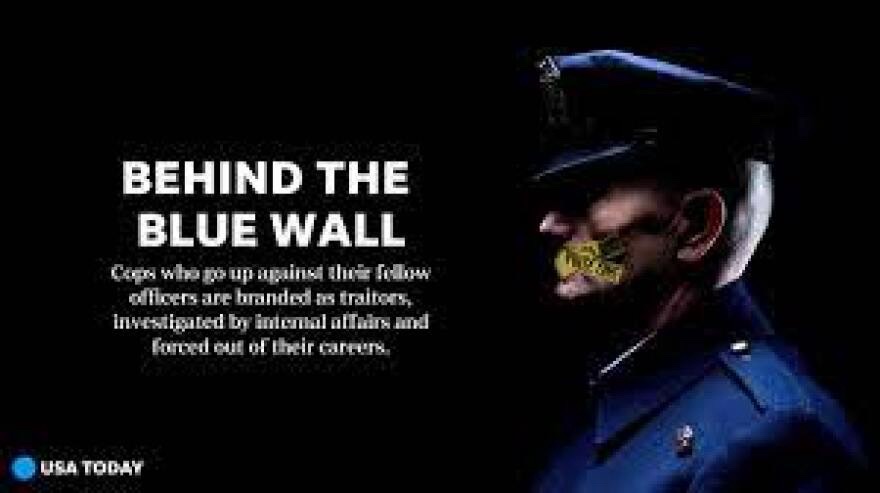
What prevents needed improvements in American policing? It is the toxic subculture which severely sanctions those in the ranks who report misconduct. They are often sanctioned, shunned, called “rats.” “traitors,” fired, or find themselves “blacklisted,” not able to be hired by another police agency. They suffer the plight of many in our workplaces who call out (“whistleblow”) when they see illegal acts or bad conduct happening at work.
One of the responses to counter this toxicity has been to train police to be able to intervene before bad things happen — “peer intervention.” To speak or act when they see a colleague about to do something illegal or against organizational policy in order to prevent harm or save a fellow officer’s career. It can be a most caring act. But, it goes against the “blue wall” of silence.
Historically, think of NYPD Detective Frank Serpico — a “police whistleblower!” The “blue wall” almost killed him. I suggest you read the recent article (below) from The Marshall Project; a suburb job of describing this major problem in policing. A problem which may be the primary reason, in my opinion, why policing in America has gotten itself stuck.
Read on…
__________________________
BY DAPHNE DURET, The Marshall Project.
These days, Austin Handle works almost as many late nights as he did when he was a police officer.
He spends hours on the phone with officers from across the U.S. and Canada who need help navigating the perils of reporting their coworkers’ misconduct. It’s been his primary role as a board member of The Lamplighter Project, a support group for police whistleblowers.
“We live in a world where they’re very confused. We live in a world where every time you speak up, people tell you that you’re not supposed to, that it’s not the right time, or that it’s not the right place,” Handle, 29, told a room full of lawmakers and civic leaders commemorating National Whistleblower Day on Capitol Hill Tuesday.
The annual event marks the anniversary of Congress passing the first whistleblower law in 1778. But while protections for whistleblowers in other government agencies and the private sector have increased in the past few decades, reforms in policing still lag far behind. Unlike most other professions, policies at many law enforcement agencies require officers to report internal misconduct. But in most agencies they have to report wrongdoing up the chain of command, which often includes the same people they are implicating.
Four years ago, Handle’s career as a police officer in the Atlanta suburb of Dunwoody came to an abrupt end. His bosses fired him in what he said was retaliation for posting a viral TikTok video during a brewing sexual harassment scandal within the department. In the video, Handle promised to expose claims of corruption among some members of the Dunwoody Police Department’s leadership.
Handle’s supervisors tried to have his law enforcement certification revoked, arguing that he was untruthful in an unrelated internal investigation. They also tried to stop him from collecting unemployment after they fired him. Both moves are tactics my former colleagues at USA Today and I found common when we published a series of stories in 2021 about the plight of police officers who break law enforcement’s code of silence.
Although a Georgia labor board ultimately ruled the claims against Handle were baseless, the “untruthful” label still haunts him. He hasn’t been able to land another job in law enforcement, despite having a clean record. That’s a startling contrast from officers with checkered disciplinary pasts, who often have no trouble landing jobs in other law enforcement agencies. Take as an example former Sangamon County Sheriff’s Deputy Sean Grayson, who was charged with first degree murder in the shooting death of Sonya Massey in Illinois earlier this month. According to published reports, Grayson jumped from one police department to another, leaving a trail of red flags that included ignoring a supervisor’s commands to stop a high-speed chase, lying on his reports and mischaracterizing his 2016 Army discharge for serious misconduct.
Back in 2021, I watched and listened as one decorated officer after another broke down in tears describing how their fellow officers threatened, followed and in one case, arrested them after they reported misconduct. Some, like Handle, had been fired or quit. Others were still trying to workalongside the coworkers they’d reported.
All of the whistleblowers were scared. And many were lonely, isolated by both eroding public trust in police and by the loss of community they experienced after breaking the “blue wall” and becoming pariahs among their peers.
Experts told us that change was coming, complete with a slate of acronymed initiatives and laws to demolish the code of silence engrained in police culture. Programs like the Active Bystandership for Law Enforcement Project (ABLE) and New Orleans’ Ethical Policing Is Courageous (EPIC) trained officers on how to police each other and prevent misconduct in real time.
Even after the George Floyd Justice in Policing Act fizzled in Congress, there was hope for the Special Inspector General for Law Enforcement Act — a bill that would, in part, create a federal hotline to field anonymous misconduct complaints from local, state and federal law enforcement officers.
But that bill failed, too. And subsequent efforts, including a stalled bill in Colorado to legally require police officers to report their coworkers’ misconduct, also fell under strong opposition from police unions.
None of this surprises Francesco “Frank” Serpico. Arguably the most famous police whistleblower in U.S. history, he’d grown jaded about police reform long before our first conversation three years ago.
It’s been more than a half-century since the days when his life story became so iconic that Hollywood turned it into a blockbuster movie. Made in the 1970s, “Serpico” earned Al Pacino an Oscar nomination for his portrayal of how Serpico outed his fellow NYPD detectives for taking bribes. Serpico received death threats, and fellow officers abandoned him at a scene with an armed assailant. After the gunman shot Serpico in the head, his partners told dispatchers that shots had been fired but never relayed that Serpico was wounded.
Now 88, Serpico has outlived all of the men who left him for dead.
In his view, little has changed. He often follows up our conversations by texting me news clippings like this one chronicling police corruption, followed by an eyeroll emoji.
“It’s like the old expression, ‘The more things change, the more they stay the same,’” Serpico told me about police whistleblower reforms when we caught up on the phone recently. “These things aren’t going to change overnight, if they change at all.”
Handle still sees potential for a cultural shift in police departments. He told lawmakers Tuesday that officers like him are the ones that people say they want in their communities. The supervisor he exposed resigned during an internal investigation, and a jury recently awarded $180,000 in damages to one of the victims.
Handle moved out of Georgia and is still thinking of applying to a police department near his new home.
“Whistleblowers of all types will never be safe or truly protected until we protect law enforcement whistleblowers,” Handle told the crowd Tuesday. Referring to police officers, he added: “They will be the ones one day, locally and at scale, to enforce the protections we create.”
____________________________
Breaking the “Blue Wall of Silence” will not be easy as Frank Serpico, now 88 years old, recently commented. But I see hope in peer intervention programs that PREVENT misconduct and save careers and organizational embarrassment.
An active peer intervention program acknowledges and supports the idea that if we, as police officers, care for one another we will step and prevent a fellow officer from doing something stupid, embarrassing, or career-ending. Professional colleagues help one another be successful.
So what needs to change is to replace the idea in the culture of policing that every cop is an independent decision maker, never to be questioned by peers, and always supported not matter what another officer does with a new and better understanding. To pledge the following:
To my fellow officers: You and I are in this important work together and I want you to know that I want you to call me out if you ever see me doing, or about to do, any act or inaction that will cause me embarrassment, punishment, or end my career. May I receive the same pledge and assurance from you?
This is how it will change — officer to officer. It won’t be by rules, it will be because police officers truly care for one another. This is how it begins. Agreed-upon peer intervention is an act of love.

 Improving Police: A Necessary Conversation
I was very impressed with this info item.
It highlights one the most important items within Police Organizational Culture – the duty to intervene. It is connected to many other impactful Police Culture Issues.
I’d be willing to discuss if you’re interested.
All the best.
Mario
Get Outlook for Androidhttps://aka.ms/AAb9ysg
LikeLike
Sure. More than willing to discuss.
LikeLike