
Today’s issue of the New York Times recommends: “Five Books to Read About Policing Before You Vote.” I added a sixth.
_______________________________________
From today’s article: “Talking about the police has become politically inconvenient. But that doesn’t mean policing has ceased to be interesting or important.
“Policing points to the irrationalities and hypocrisies that undergird our social contract.
“For those of you who haven’t ceased to be interested in that, here are some books that get to the crux of the matter…

1. An Inconvenient Cop
By Edwin Raymond with Jon Sternfeld
“Policing is inevitably associated not just with violence, but with shame: the shame of being coerced and dehumanized. But there’s also the shame associated with being a victim of crime, the feeling of vulnerability that comes with being violated and the sense of helplessness that follows calling upon the police for assistance. For Edwin Raymond, a Black Brooklynite, shame also follows the experience of being a cop. “I was a pawn on the front lines of a systemic attack on my own people,” he writes in this memoir of his time in the ranks of the New York Police Department…”
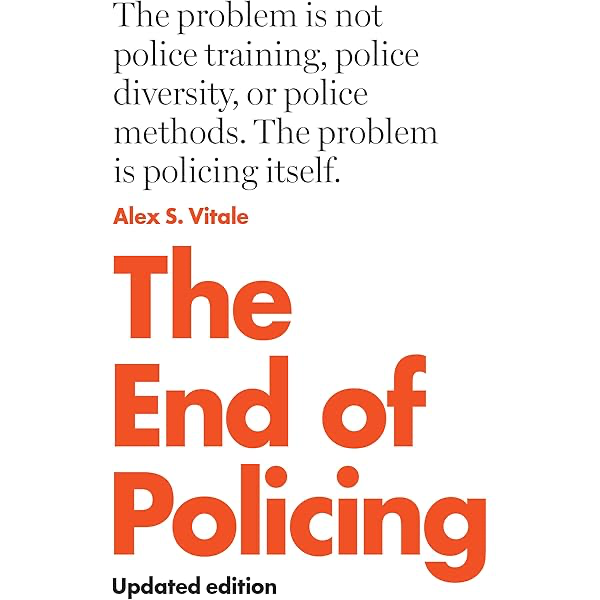
2. The End of Policing
By Alex S. Vitale
“For readers seeking an overview of the problems with American policing, Alex S. Vitale’s compact 2017 volume is bracing and thorough. The police, Vitale contends, might believe they are in the ‘public safety’ business, but their principal purpose — their ‘end’ — has always been ‘managing the poor and nonwhite.’ In morally grave but never overheated prose, Vitale details the destructive effects of our national addiction to policing on vulnerable groups, those with whom the police have the most contact: poor people, teenagers, drug users, sex workers, the homeless, the mentally ill, gang members, dissidents and migrants…”
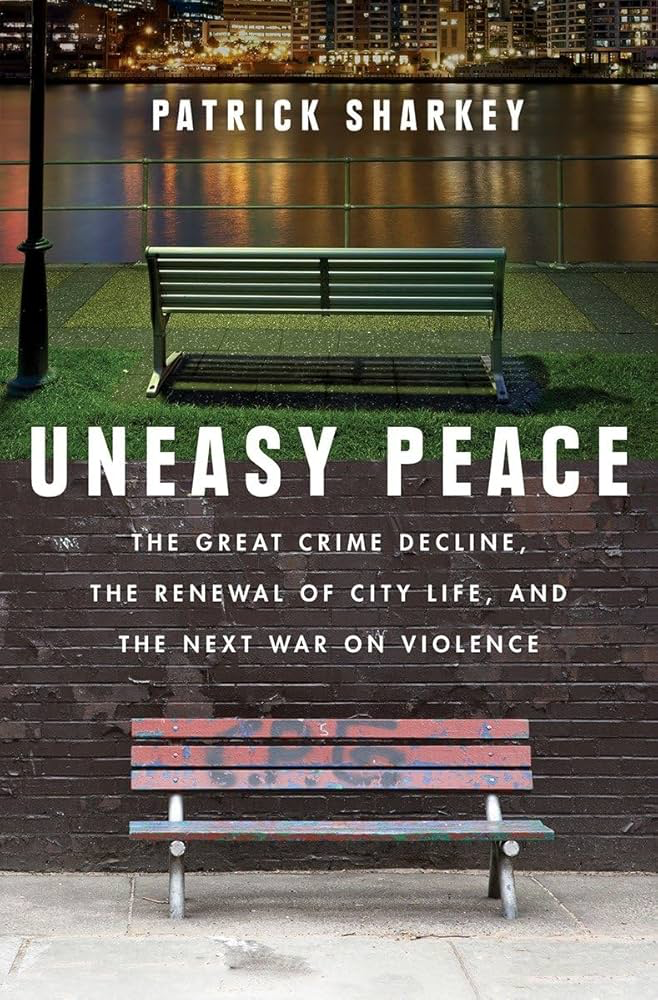
3. Uneasy Peace
By Patrick Sharkey
“The sociologist Patrick Sharkey is in favor of rigorous policing. Look at the data, he says. Violent crime has indeed declined precipitously from its peak in the 1990s, and this decline has been massively beneficial to the most disadvantaged communities, young Black men most of all, who have seen a significant increase in life expectancy as the homicide rate has fallen. And this didn’t happen by itself. A more aggressive and punitive approach to policing and incarceration in poor neighborhoods, he argues, has had at least something to do with the decline in criminal violence. Sharkey doesn’t paper over the uncomfortable trade-offs. He acknowledges the costs of ‘broken windows,’ stop-and-frisk and mass incarceration. In the second half of the 20th century, he writes, the police became a ‘constant, sometimes menacing presence in low-income communities of color…”

4. Badges Without Borders
By Stuart Schrader
“Stuart Schrader, a scholar of race and policing at Johns Hopkins, supplies another piece of the puzzle. The tools and techniques of American policing in the latter half of the 20th century, he writes in this erudite survey, were first conceived and implemented to suppress Communist subversives in other nations. Schrader reveals a vibrant export-import trade in technology, expertise and personnel — continuing today in the interest of fighting ‘terrorism’ — which expands the frame of the American police apparatus beyond our borders. In countries across the Global South, American-trained police units engaged in systemic violence against dissidents, union organizers and workers. Meanwhile, techniques innovated abroad were brought home and used against American protest movements.”

5. From the War on Poverty to the War on Crime
By Elizabeth Hinton
“How did we get here? Why are the police simultaneously serving as social workers, mental health providers, guidance counselors and violent enforcers of the law? The Yale historian Elizabeth Hinton’s surprising chronicle of the well-intentioned but misguided U.S. social programs that facilitated mass incarceration provides an answer… Antipoverty programs expanded the influence of the federal government in the everyday lives of the urban poor, making it easier for the state to surveil and punish them when the Johnson administration shifted its focus to policing riots and fighting crime…”
____________________________
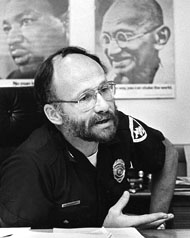
And permit me to, unabashedly, add a sixth. It is my story. What my life in policing was like as a young (and “progressive and reform”) police chief trying to improve the craft of policing a city.

6. David Couper: Beyond the Badge (my add!)
By Rob Zaleski
“When he stepped down in 1993 after 21 contentious, but highly successful years as the police chief in ultra-liberal Madison, Wisconsin, David Couper was widely regarded as one of the most influential law enforcement officials in Wisconsin’s history. But little was known about his private life—or what motivated him to transform a paramilitary-type department into one that emphasized community relations; and to hire a large number of women and people of color, dramatically changing the complexion of the department. In 2020—nearly three decades after his shocking decision to resign and become an Episcopal priest—the former Marine met with award-winning columnist Rob Zaleski for a series of lively and provocative interviews that lift the veil on his private life and explain for the first time the reasons behind his many controversial decisions. He also talks about his unstable upbringing in the Twin Cities, the personal tragedies he’s endured, and his evolution into one of the most inspiring human rights activists Wisconsin has known.”

 Improving Police: A Necessary Conversation