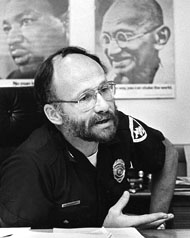

I have attached to this blog a free e-book by three retired senior police leaders. It is an excellent dive into a most troubling topic and one in which I have extensively written on this blog over the past 14 years I have authored this site — police use of deadly force..
This is deeply needed today and Tim Oettmeier, Terry Bratton, and Frank Webb have done an excellent job with “Reflections on Police Shootings”
This book should be on the reading list of every police officer and discussed thoroughly in every recruit school and classes on leadership.
Many of us are getting old. We served for many years. And the author’s care enough about the importance of how police in a free and open society use force to carry out there duties.
In their concluding chapter, the authors write, “Our purpose has not been one of suggesting OISs can be eliminated. These incidents will continue to occur simply because lives of people will be seriously threatened causing officers to fulfill their duty and obligation to protect them (and/or themselves) in a manner that may require the discharge of their firearm. These eventualities enhance the importance of the public’s right to know why these incidents occur, how well they were handled, and how the behavior of all involved participants was accounted for.”
Here’s their recommendations:
“We have attempted to identify critical factors we believe merit attention to improve an officer’s ability to handle difficult, volatile, and potentially dangerous incidents:
“1. Fear – is a legitimate emotion that will affect one’s cognitive functions, which in turn hampers the ability to make effective decisions. Officers are certainly aware that fear is associated with the job even if is not openly discussed. They need a thorough understanding of how fear affects their ability to perceive and think, how it affects their relationship with different segments of the public, and what they can do to effectively manage it.
“2. Self-Imposed Vulnerability – when advancing on a known perceived threat, officers must be cognizant of unnecessarily placing themselves in positions of vulnerability for their own well-being and the well-being of others. In an effort to minimize danger, their attempt to assert their control over someone may actually aggravate the incident. We believe this a significant factor in officer involved shooting (OIS) incidents.
“3. Non-Compliant Behavior – requires officers to be patient, flexible, and able to communicate tactically sound decisions when interacting with this type of behavior. We provided an array of options officers can use to entice a person to change his/her mind. The most critical aspect of these exchanges is making the non-compliant person realize he/she is responsible for the consequences of their own decision.
“4. People in Behavioral Crisis – probably one of the most difficult aspects of police work is attempting to manage a person who, due to a mental health crisis (inclusive of those whose behavior may be associated with inebriation or adverse psychological reactions from drugs usage) may not be capable of effectively communicating with an officer or sufficiently understanding what the officer wants him or her to do. These situations require specific knowledge if they are to be handled properly. Absent access to mental health specialists, officers need specific training on this matter. We identified an extensive description of the current state of affairs on this issue along with a comparative analyses of how officers have been and should be handling these types of incidents.
“5. The Issue of Necessity – this is a controversial issue in policing because it brings to the forefront a focus on officer tactical decision-making during OIS incidents. It prompts asking the inevitable questions of: ‘Could such an incident have been handled differently resulting in a less harmful outcome?’ ‘What was the officer thinking?’ ‘Were policies unclear or was their training less than adequate?’ The issue of necessity opens the door to examining a wide array of variables that influence the outcomes of use of force incidents.
“6. Totality of Circumstances – is a divisive issue among the federal circuit courts despite guidelines set forth by the Supreme Court. Rather than solely focusing on the circumstances the moment an officer discharged his/her weapon, attention is also being directed towards those decisions and actions taken prior to an officer being in a position to fire his/her weapon. There are serious policy and training implications associated with this perspective.
“7. Tactical Decision-Making – involves learning a series of skills that will influence officer decisions; most important, these skills must be used on a regular basis, so they become second nature to officers when confronted with a potentially harmful or dangerous situation. It requires officers to be cognizant of situational interactions, extraneous factors affecting those interactions, and the consequences of those interactions – all of which influences an officer’s decision-making abilities. It also requires officers to learn from their experiences so they can become more proficient in establishing tactical superiority as a means of enhancing the safety of all who are involved in an incident. Officers should be cognizant of their limitations – they should make decisions based on what they know and what they are capable of doing!
“8. Police Bias – is a highly contentious issue within and among minority communities,characterized by the belief in some instances, that OISs are the product of an officers’ racist behavior. Despite the intense amount of research focusing on the disproportionality of minority victims of police shootings, a significant correlation has yet to be determined. This does not diminish the importance of this belief, but it does serve notice to the police as to how people perceive what they do and why they do it, even if research efforts have yet to consistently demonstrate statistically significant findings validating this relationship.
“9. Learning from OIS Incidents – there is a need to acquire tactical decision-making information from incident reports along with criminal and administrative investigative reports derived from use of force incidents, especially those involving the discharge of one’s firearm. We examined two agencies’ efforts to extract from various organizational reports, information that identified “tactical errors” and information “identifying effects of tactical decision-making components.” This information should be used to enhance policies, fine tune operational protocols, and enhance the quality of training programs.
“10. Training Issues Associated with OIS Incidents – all OIS incidents represent opportunities to learn; we have suggested particular attention should be directed towards four training challenges: course integration, instructional continuity, methods of learning and linkages to policies. It is extremely important to acknowledge the gap that typically exists between what is said in a policy, what the training actually achieves, and how well officers, supervisors, and managers are able to demonstrate the relationship between the two. The process of integrating policy with training is crucial.
“Our purpose has not been one of suggesting OISs can be eliminated. These incidents will continue to occur simply because lives of people will be seriously threatened causing officers to fulfill their duty and obligation to protect them (and/or themselves) in a manner that may require the discharge of their firearm. These eventualities enhance the importance of the public’s right to know why these incidents occur, how well they were handled, and how the behavior of all involved participants was accounted for.
“Police executives have an obligation to determine what can be done to help minimize these confrontations from occurring; or if unavoidable, acquire knowledge that when shared with their operational personnel, will help them manage these incidents more effectively. As authoritative
decision-makers, police executives have a duty to publicly account for how well they are meeting this obligation.
“There is much that can be done to improve how OIS incidents are handled; but executives must be willing to continuously act. They must be open to acquiring information from within their own agency as well as from other agencies willing to share their experiences. The process of continuous learning and folding such knowledge back into the organization is an on-going, never-ending process.
“We are hoping the content of this book has stimulated thoughts, maybe even served to facilitate discussions. We believe this information is beneficial in helping the police improve their performance when subjected to highly stressful conditions…”
Well done!
READ the e-book HERE.
——————

 Improving Police: A Necessary Conversation