In Defense of Affirmative Action and DEI: Standing Up for Justice in a Diverse America
This Is What Democracy Looks Like: Diverse, Fair, and Just
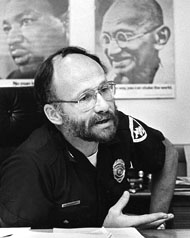
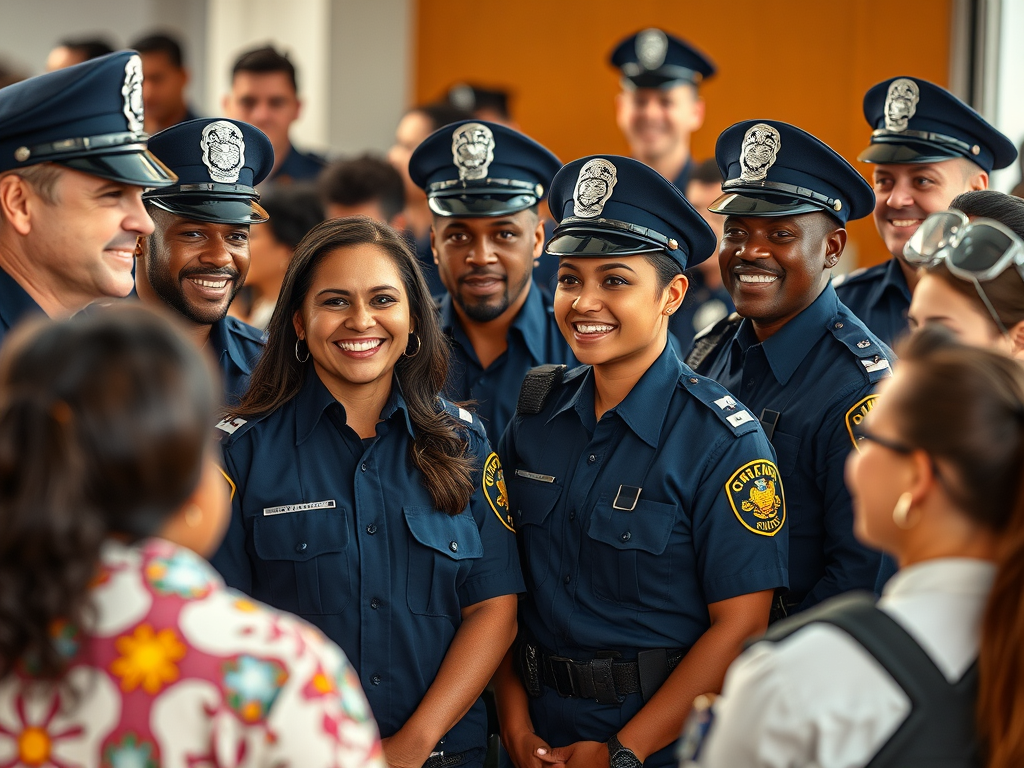
I have long defended affirmative action—not as a handout, not as a lowering of standards, but as a tool of justice and a practical necessity in a diverse, democratic society. As a former police chief and someone who spent a lifetime working for justice and accountability in law enforcement, I argued—and still argue—that a police agency must reflect the people it serves. Not only to build trust, but to be effective. If the people cannot see themselves in those sworn to protect them, there will never be trust. And without trust, policing—and democracy—fail.
Today, the next generation of that hard-fought principle—what we now call Diversity, Equity, and Inclusion (DEI)—is under relentless attack. Politicians, media pundits, and even courts have begun to frame DEI as a threat rather than a promise. They call it “wokeism,” as if fairness, representation, and opportunity were a virus infecting the American dream.
Let me be clear: that is wrong. It is a dangerous distortion of what DEI really is.
DEI is not a threat. It is a response to injustice. It is the child of the civil rights movement, the promise of our Constitution, and the embodiment of our best values as Americans. DEI is not about favoritism. It is about fairness. It’s not about excluding some, but about finally including all.
America is a nation of immigrants, a nation built on stolen land, and one that has too often denied full citizenship—full humanity—to entire groups of people. From slavery to Jim Crow, from the Chinese Exclusion Act to Japanese internment, from “redlining” to voter suppression, the story of America includes both great promise and great betrayal.
Affirmative action and DEI exist to address those betrayals. They are imperfect tools, yes—but they are necessary ones. Without them, the playing field is not level. Without them, the deep scars of racism, sexism, homophobia, and other forms of discrimination are simply allowed to fester.
In my years of police leadership, I saw firsthand the power of inclusion. When we hired women and people of color, when we opened the doors to those previously excluded, our department changed—and our community changed. We were better at our jobs. We earned more trust. We became more just.
But more than that, we lived up to the values of our profession and our nation.
To dismantle DEI now is to turn our back on that progress. It is to say that fairness no longer matters, that representation is irrelevant, that history can be erased. It is to retreat into a false neutrality that ignores the very real barriers so many Americans still face every day because of who they are, how they look, where they were born, or who they love.

 Improving Police: A Necessary Conversation
Amazing how you have many male cops complaining that due to DEI, the professinal standards of police have been lowered. From what I have seen and read, police standards have never been raised nearly 60 years. Do we have police academy training that last 2 to 4 years, Nope. Do we see cops turning in other cops. Not really. Do we have fewer police shootings, nope, they are probably at the same level or even higher compare to other years.
If you go to youtube and see Judge David Fleischer in action, the judge gets tick off about police officers writing shoddy police reports that should have be rejected by the DA’s office and the cases should have never been allowed to come to Fleischer’s court or any other court in the first place. People complain about kids not learning to write and blame the teachers for it. Well, it seems that the adult police instructors are incapable of teaching their cadets how to properly write a report along with the police supervisors not review the reports with a critical eye.
LikeLike