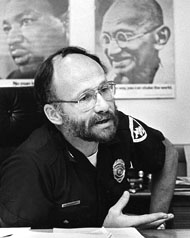

I recently decided to jump into the Artificial Intelligence world by asking ChatGPT to summarize my book, “Arrested Development: A Veteran Police Chief Sounds Off…” It was quite the learning experience and a very good summarization What do you think?
____________________________________
Arrested Development: A Veteran Police Chief Sounds Off About Protest, Racism, Corruption and the Seven Steps Necessary to Improve Our Nation’s Police distills David C. Couper’s half-century in policing into a candid diagnosis—and a practical cure—for what ails American law enforcement.
1. The Core Problem: “Arrested” Growth
Couper argues that U.S. policing has been stuck in a self-perpetuating cycle of failure fed by four chronic obstacles:
| Obstacle | What it looks like | Why it cripples policing |
| Anti-intellectualism | Dismissing higher education and critical thinking | Limits innovation and strategic vision |
| Violence | Reflexive resort to force | Erodes public legitimacy and fuels lawsuits |
| Corruption | “Us-versus-them” ethics, rule-bending | Undermines moral authority |
| Discourtesy | Everyday disrespect toward the public | Destroys community trust |
2. Seven Steps to Democratic, Trusted Policing
Couper’s remedy is a leadership roadmap that any agency—large or small—can follow:
- Envision – Craft a bold, values-centered vision of policing in a democracy.
- Select – Recruit the “finest and brightest,” not merely the fastest or toughest.
- Listen – Practice two-way listening with officers and community members.
- Train & Lead – Replace paramilitary habits with professional education and collaborative leadership.
- Improve Continuously – Treat every process (use of force, investigations, discipline) as improvable.
- Evaluate – Measure what matters: trust, problem-solving, and fairness—not just arrests.
- Sustain – Institutionalize reforms so they outlive any one chief or political cycle.
3. Key Themes
- Guardians versus Warriors – Couper urges a shift from fear-based, militarized postures to service-oriented “guardians.”
- Education as a Force Multiplier – College-educated officers, he contends, are better problem-solvers and constitutional guardians.
- Community Partnership – Real legitimacy springs from daily courtesy and shared decision-making, not public-relations campaigns.
- Leadership Accountability – Reform lives or dies with front-line supervisors and the example set by chiefs.
4. Why the Book Matters
Written by a chief who transformed Madison (WI) PD from an all-white, largely all-male force into one that mirrored its diverse community, Arrested Development pairs street-level credibility with a scholar-practitioner’s lens. It remains a field manual for anyone—police leader, city official, or engaged resident—who believes a free society deserves effective, ethical, and trusted policing.

 Improving Police: A Necessary Conversation
1 Comment