
There a Right and Wrong Way of Improving Police in America
Recently, a former police chief and current criminal justice professor responded to one of my blog posts, “Beware: They May Be Coming for You!” He suggested that institutions like the FBI deserve whatever punishment the current administration throws at them, and he welcomed the rebranding of the Department of Defense as the “Department of War.” To him, the surest path to safety appears to be through fear, force, and the elimination of dissent.
His view is not uncommon. During my years in policing, I often heard similar sentiments from officers who resisted the call to serve and improve, who bristled at community-oriented policing, and who doubted that respecting all people—no matter their background—was essential to our work. They wanted to get the “job” done quickly with as much force, or threat of force, as necessary — unchecked by empathy, restraint, policy, or constitutional limits.
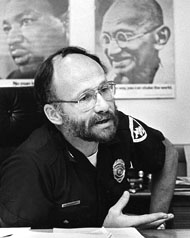
As chief of police in Madison, Wisconsin, for over two decades, I saw both this kind of pushback and the transformation that came when officers embraced a different, and ultimately more effective way. We pioneered community-oriented policing at a time when many departments still clung to a command-and-control, “warrior” mentality. We diversified the ranks. We insisted on higher education standards, accountability, and ongoing training in communication and de-escalation. And over time, the culture shifted. But it takes both time and commitment.
The results were not abstract. Madison consistently ranked among the safest cities of its size. Citizens trusted their police more than in many other communities. And when difficult moments came—protests, demonstrations, or surges in crime—our officers had the credibility and relationships to navigate them without resorting to overwhelming force. It wasn’t perfect, but it was a model that proved policing could be fair, trusted, constitutional, and effective all at once.
That is why I find arguments for a “Department of War” model so troubling. I served in the Marines. I know firsthand that strength is not just pushups and punishment. In today’s world, military strength depends on advanced knowledge, technical skills, and the full inclusion of women and men of every background who bring their talents to the mission. To exclude or demean them is to weaken ourselves, not strengthen us. The same if true for policing. Local, county and state policing is not our “Departments of Force Use” but rather “Departments of Peacekeeping and Community Safety.” I hear this even today when police argue whether they are in the business of law enforcement or policing. There is a big difference in both practice and attitude.
A free and diverse society needs police officers who reflect and practice our national values on the street every day. That means listening, de-escalating, and solving problems in partnership with the communities we serve. It means being fair and firm, yes—but also being constitutional officers sworn to protect the rights of all people.
My colleague is right about one thing: culture drives behavior. But the culture we should be striving for in policing is not one of fear, domination, or exclusion. It is a culture of service, fairness, and courage—the courage to hold ourselves to the highest standards even when it is difficult.
For decades, I’ve witnessed the pushback to these ideas. But I’ve also seen what happens when leaders and officers embrace them: communities grow stronger, police earn trust, and both officers and citizens are safer. Madison’s experience is proof. That is the better way. That is the way of policing in a democracy.
—————
P.s. Retired Marine General James Mattis and a former Secretary of Defense (not War) adds to my concerns in his post today on Facebook and offers a solution.
https://www.facebook.com/share/p/1BMqXzC6fN/?mibextid=wwXIfr

 Improving Police: A Necessary Conversation