After more than thirty years in policing and an equal time in ministry, I have come to believe that the greatest calling of a police officer is not control, compliance, or command. It is to help our society grow, thrive, and live peacefully together—to embody and protect the values at the heart of our democracy. Every officer’s badge is more than a piece of metal; it represents a sacred trust to defend the rights, dignity, and freedoms of every person—citizen or not.
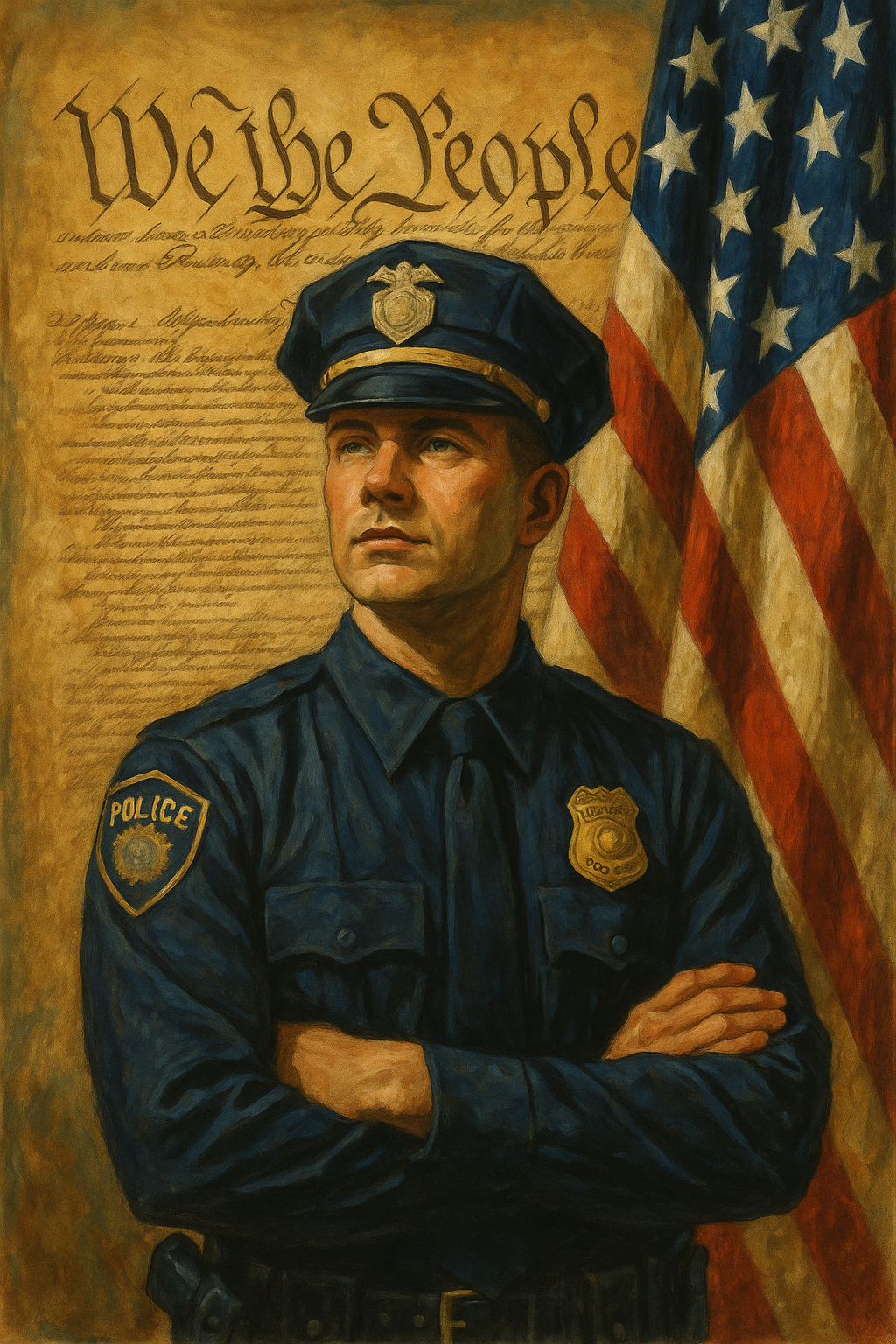
This is a time to remember who police truly are in our way of life. They are not mere enforcers of statutes or keepers of order. They are Constitutional Officers—those among us chosen to uphold and protect not only the laws of the land, but the supreme law upon which all others rest: the Constitution of the United States.
The oath every police officer takes should not bend with political winds or popular passions. It binds them—like our judges—to defend the enduring principles enshrined in the Bill of Rights, those first ten amendments that guarantee freedom of speech, press, and assembly; protection from unreasonable searches and seizures; and equal protection under the law.
In a free society, police are not warriors of the state but guardians of the people. They are called to model the virtues that sustain democracy itself: fairness, restraint, empathy, and respect for human dignity. In doing so, they fulfill our Founders’ vision of a citizen police—drawn from the community, reflecting its diversity and values, and exercising authority with both wisdom and compassion.
This idea is not new. Plato, in The Republic, described the “guardians” as those whose strength was tempered by moral virtue and whose power was disciplined by reason and justice. America’s police should be cut from that same cloth—our best and brightest, selected for their emotional intelligence and moral courage, then highly trained in all aspects of their work.
Today’s debate—guardian or warrior?—misses the deeper question: whom do you serve? Police in a democracy serve not one person, but all people. Their allegiance is to a document, not a leader; to the rule of law, not the rule of force. They must always guard and protect our Constitution and be living examples of justice itself:
- Listening before acting.
- Making decisions grounded in law, not bias.
- Treating every person with dignity.
- Acting with integrity, even when no one is watching.
When police act with compassion, fairness, and emotional control, they do more than enforce the law—they strengthen the very fabric of our republic. Each lawful, humane act by a police officer is a small but vital victory for the Constitution itself and for the ideals of a free society.
Today, those ideals are under attack. Forces of division and authoritarianism seek to erode the rule of law, to silence dissent, and to pit citizen against citizen. These are not abstract threats—they are real, rising, and dangerous. And if democracy is to survive, those sworn to defend it must stand firm.
Police—our Constitutional Officers—must be among the first to resist any effort to dismantle our democracy. They must remember that their oath is not to a political party or a single man, but to the people and their Constitution.
We must expect and support officers and their leaders who understand that their authority comes not from fear or force, but from the consent and respect of the governed. And we must honor those who serve as true guardians—defenders of our Constitution, models of justice and compassion, and living proof that a democracy can, and will, endure when its legal systems stand up, speak out, and serve the people—and the principles—on which they stand.

 Improving Police: A Necessary Conversation