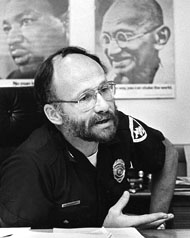
As many of you know, I spent more than 30 years as a police officer, including serving as chief in Burnsville, Minnesota and Madison, Wisconsin. I’ve been on the street, in the command office, and in the room when hard decisions had to be made. I write now to speak directly to you—not as a politician, not as an activist, but as someone who knows what it means to wear the badge and live with the consequences.
What is happening right now in American cities is not routine law enforcement. Federal immigration agents are operating in ways that rely on secrecy, intimidation, and legally questionable authority. Masked agents detain people in public spaces. Administrative warrants not signed by judges are treated as blank checks. People—often people of color—are grabbed, handcuffed, and taken away while families and bystanders watch in fear.
You know this isn’t normal policing. And you know it isn’t right.
Here is the hard truth: when this happens in your city and you stand aside, the public does not distinguish between federal agents and you. They see uniforms, weapons, and force—and they think police. When rights are violated, trust in you erodes whether you were involved or not. This impacts both your personal safety and effectiveness.
That is not fair—but it is real.
You took an oath to the Constitution and signed the Police Code of Ethics. Not to a president. Not to political pressure. That oath and your ethics do not change when another badge shows up.
Some of you may tell yourselves, “This isn’t our jurisdiction,” or “We were told to stay out of it.” I understand the instinct. Policing already carries enough risk. But neutrality in moments like this is not neutral. It has consequences—for your legitimacy, your safety, and the future of the profession.
Let me be clear about three things that follow directly from your oath and your code of ethics.
First, you should not participate in immigration enforcement.
Immigration is a federal civil matter. When local police get entangled in it, communities stop reporting crimes, witnesses disappear, and victims retreat into the shadows. You end up doing worse policing, not better.
Second, your duty to intervene does not stop at the federal line.
If you see unlawful force used, or a detention without proper judicial authority, your duty does not evaporate because the person using force works for a federal agency. Duty to intervene is about protecting life, rights, and the integrity of the badge—your badge.
Third, your job is to protect every person in your jurisdiction.
The Constitution protects persons, not just citizens. That is settled law. Your oath contains no political exception and no immigration carve-out.
I know what some of you are thinking: This will get us in trouble. This will escalate things. This will make our jobs harder.
Here’s what history teaches us: silence does not make policing safer. It makes it weaker.
I lived through periods when police were asked to do things that later generations would look back on with disbelief—segregated departments, women excluded from patrol, protesters treated as enemies. Every one of those practices survived as long as officers stayed quiet and told themselves, “This is just how it is.” Change only came when officers and leaders decided that legality and legitimacy — our Constitutional values — mattered more than comfort.
This moment is no different.
You cannot control federal policy. You cannot fix immigration law. But you can control how policing is done in your city, under your authority, consistent with your oath.
Policing in a democracy is hard precisely because it requires restraint when power would be easier. Courage when silence would be safer. Accountability when deflection would be convenient.
Years from now, people will ask what we did when fear-based abuse and enforcement became normalized. They will not ask how uncomfortable it was. They will ask whether we honored our oath and our code of ethics.
This is one of those moments.
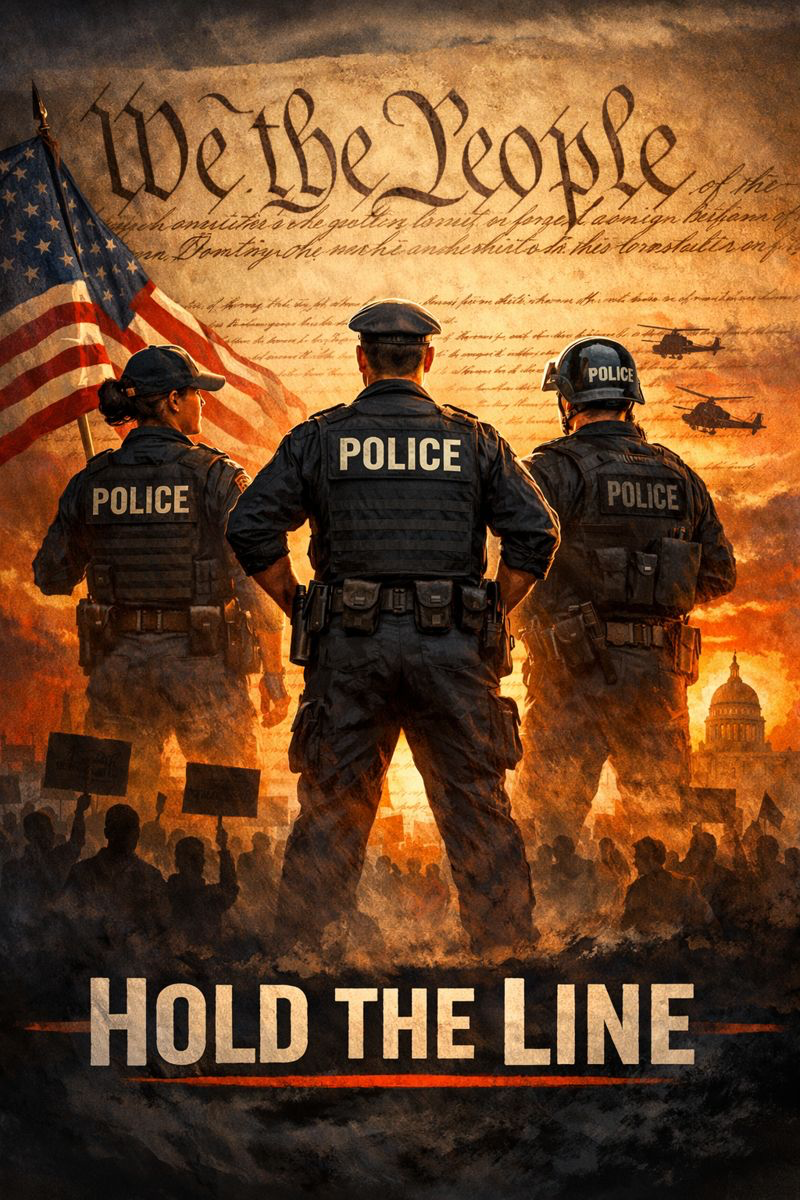
Hold the line.

 Improving Police: A Necessary Conversation