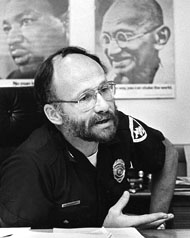
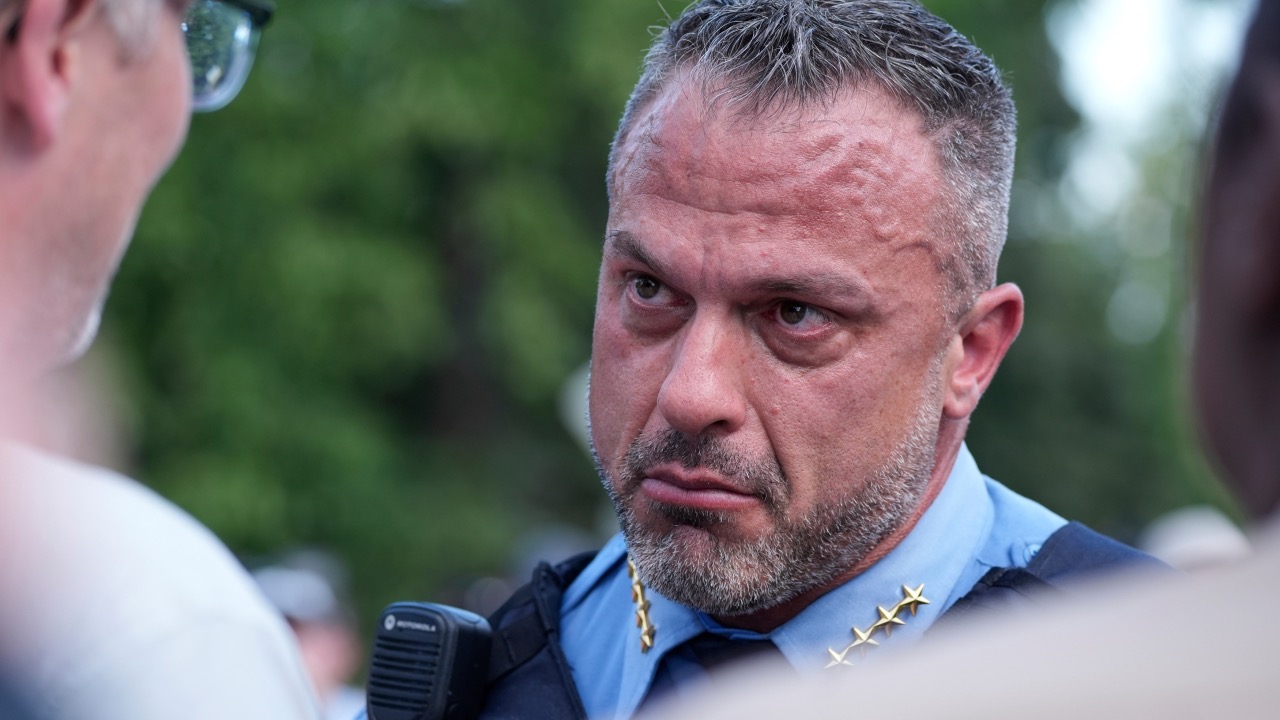
AP Photo/Bruce Kluckhohn
Why Chief O’Hara’s Message Matters Now
Minneapolis Police Chief Brian O’Hara recently published an op-ed titled “Fear Undermines Public Safety,” and it deserves national attention. Not because it is political—but because it is honest.
O’Hara makes a simple but powerful point: when people are afraid to call 911, cooperate with police, or report crime, public safety collapses. Fear does not protect communities; it isolates them. It drives crime underground, leaves victims unprotected, and weakens the very institutions meant to keep people safe.
This is not theory. It is lived reality for police leaders who understand that trust is the foundation of effective community-oriented policing.
O’Hara is careful to clarify what his argument is not. He is not advocating selective enforcement or political resistance. He is not calling for defiance of federal law. He is naming a truth that too many avoid: how enforcement is carried out matters as much as whether it is carried out at all.
When policing practices generate fear—especially in immigrant communities—public safety suffers. People stop reporting crimes. Witnesses disappear. Victims remain trapped. That is not compassion replacing law; it is law being undermined by fear.
Importantly, O’Hara affirms that the Minneapolis Police Department does not enforce federal immigration law. Their duty, as he states clearly, is to protect life, uphold the Constitution, and serve all residents. That distinction matters. It preserves trust, protects officers, and strengthens the legitimacy of policing itself.
What makes this argument nationally important is that it pushes back against a growing illusion: that fear is an effective tool of governance. It is not. Fear corrodes legitimacy. It breeds silence instead of cooperation. And it ultimately makes communities less safe.
O’Hara does something increasingly rare—he speaks plainly about moral responsibility without abandoning legal discipline. He does not call for obstruction or defiance. He calls for professionalism, restraint, and accountability. He insists that public safety and human dignity are not in conflict, but inseparable.
At a moment when power is too often confused with strength, this matters. The rule of law does not survive through intimidation or spectacle. It survives through trust, transparency, and the courage to tell the truth.
Chief O’Hara’s message is not radical. It is foundational. And our nation would be safer if more leaders and their communities were willing to say it out loud.

 Improving Police: A Necessary Conversation