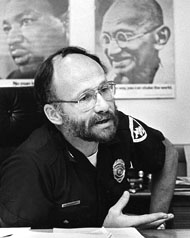
There are moments in reflecting back to the work I did in policing to remind me why it matters. My recent trip to Rockford, Illinois was one of them.
I’ve spent decades on both sides of the conversation about public safety — behind the badge and, more recently, helping communities and their police find common ground. Rockford gave me the opportunity to bring that experience into the room with some of the people who matter most: everyday citizens, faith leaders, business owners, police officers, and elected officials. All together. All willing to listen and engage.
That’s not something you take for granted.
Why Community-Oriented Policing?
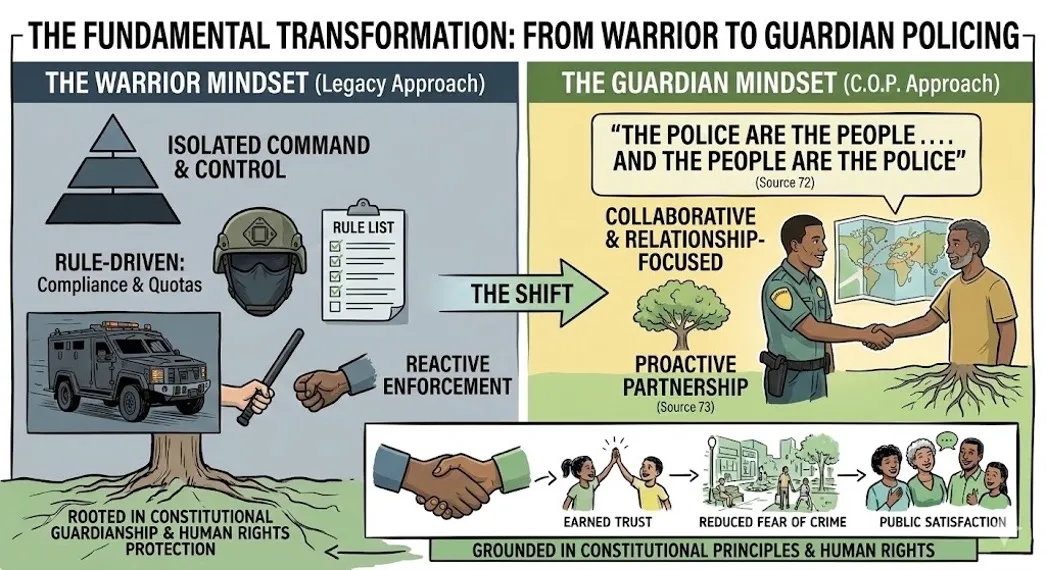
Community-oriented policing isn’t a new concept, I was in the forefront of its development through the late 1960s on, but it remains one of the most misunderstood — and underutilized — strategies in public safety today. At its core, it’s about shifting the relationship between police and the community from transactional to relational. It’s not just about responding to crime after the fact. It’s about building the kind of trust that prevents crime in the first place.
For too long, policing has separate from rather than engaged with their communities — with police departments focused inward, measuring success by arrest numbers and response times rather than by the health of the relationships (trust and respect) they hold with the people they serve. Community-oriented policing challenges that model. It asks officers to be present, visible, and genuinely invested in the neighborhoods they patrol. It asks residents to be partners, not bystanders.
The Rockford Conversations
What made this trip particularly meaningful was the diversity of voices in the room. From neighborhood residents and faith-based community leaders to local business owners, police leaders, and elected officials — each group brought a different perspective to the table, and every one of them was engaged.
That kind of cross-sector conversation is rare, and it’s powerful. When a business owner sits next to a police officer and they’re both nodding at the same idea — that trust is built through consistency and presence, not just enforcement — something shifts. When an elected official hears directly from a neighborhood resident about what safety actually feels like on their block, the abstract becomes real.
The dialogue across all these sessions reinforced something I’ve long believed: people want to get this right. They want safer communities. They want officers who know their neighbors. They want leadership that listens. The willingness was there in abundance — what many communities lack is a clear framework for turning that willingness into action.
Key Takeaways from the Sessions
Several themes emerged consistently across the groups:
Trust is the foundation — and it must be earned over time. No program, policy, or initiative can substitute for the slow, deliberate work of building relationships between law enforcement and the community. Officers who build community relationships and show up before there’s a problem are the ones communities turn to when there is one.
Elected officials have a critical role to play. Community policing doesn’t succeed on goodwill alone — it requires policy support, budget investment, and leadership from the top. When elected officials champion this approach publicly and meaningfully, it sends a signal to both departments and communities that this is a priority.
Practical strategies matter. Concepts are only as useful as their implementation. Across the sessions, we discussed concrete approaches: foot patrols, community liaison programs, neighborhood advisory councils, youth engagement initiatives, and the importance of officers spending time in communities outside of emergency response.
The conversation itself is part of the solution. Simply creating space for police and community members to talk — honestly, openly, and without an agenda — begins to dissolve the distance that breeds mistrust. Rockford showed that when you bring the right people together with the right intent, progress is possible.
The WIFR Interview
At the beginning of my first of two community presentations, I had the opportunity to sit down with WIFR for a video interview to discuss the talks and the broader case for community-oriented policing. It was a chance to bring the conversation to an even wider audience — because this work doesn’t stay in conference rooms. It belongs in living rooms, on front porches, and in the public discourse.
If you haven’t seen the interview, I encourage you to watch it. The more people understand what community-oriented policing actually is — and what it isn’t — the better equipped we all are to demand it, support it, and hold our institutions accountable for delivering it.
Final Thoughts
Rockford reminded me that the appetite for this kind of change exists. It’s not a partisan issue. It’s not a law enforcement issue versus a community issue. It’s a shared investment in the kind of public safety that works for everyone.
I left Illinois encouraged. The questions were thoughtful. The engagement was genuine. And the conversations that started in those rooms won’t end there.

 Improving Police: A Necessary Conversation