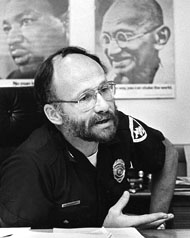

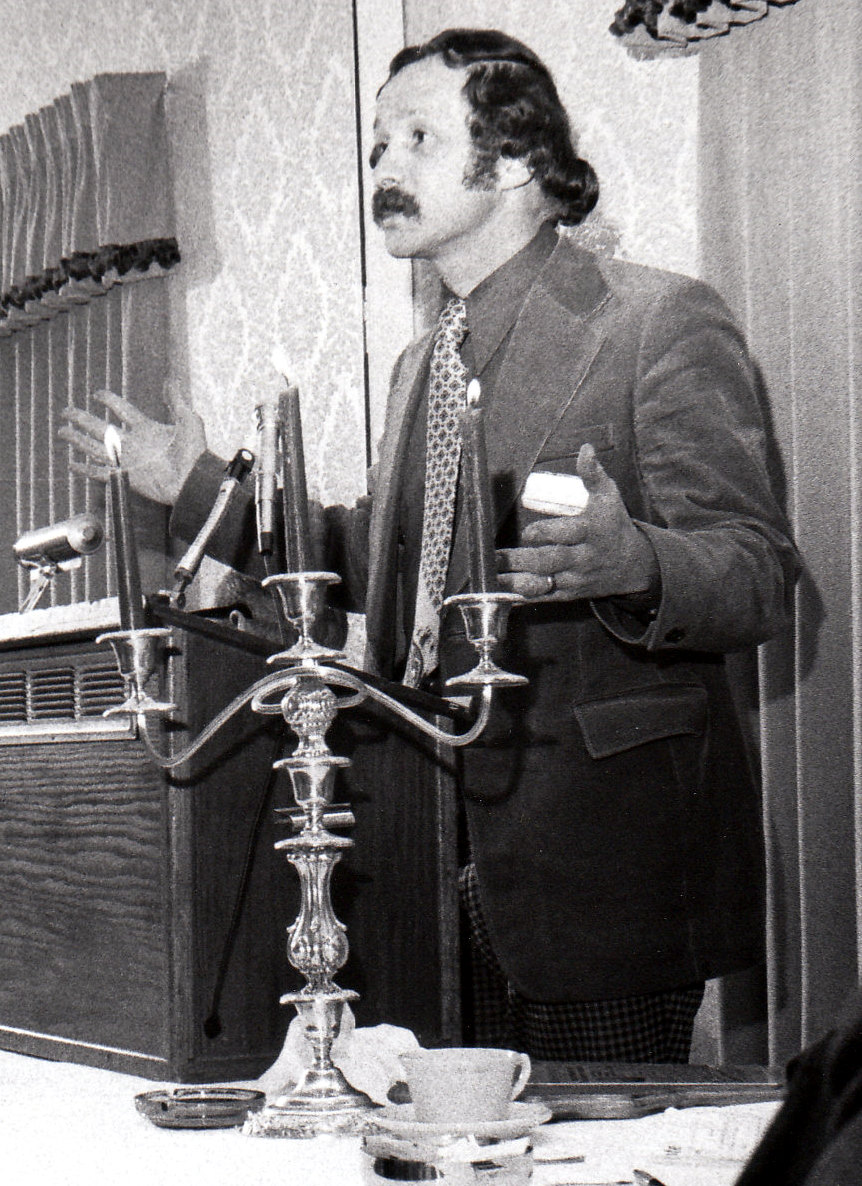
I came to Madison in December of 1972. Bill Dyke was the mayor and not very happy with my appointment. For many weeks he refused to meet with me. But the spring election was only a few months away and the fall election in Dane County had swept liberals into most county offices including that of sheriff.
An excerpt from my book:
“During Mayor Dyke’s campaign speeches, he often made fun of me by making light of my term ‘conflict management’ to describe the way we were now going to approach protest in the city. He made every effort to challenge me, undermine me, and underplay my authority within the department. Looking for continued support from officers on the department, he had continued to refuse to meet with me, and everyone in town knew it…
“As election day came closer, it looked like Dyke was going to be beaten, and I could feel the tension within the police department. Most of the officers were strong Dyke supporters, and hardly anyone within the department voiced support for Soglin. They knew Paul Soglin from his earlier days on campus. He was a rebel, a student activist. He had the additional credentials in the student district he represented of being arrested and jailed by Madison police during a campus demonstration. His long hair had been shaved while he was in custody for ‘health’ reasons.”
Soglin’s election made my job a lot easier. Soglin depended on me to keep peace on the streets of the city. It turned out that handling protesters on the street was a lot easier than handling the ones I had within my own department.

 Improving Police: A Necessary Conversation
In 1973 I was 29 years old and newly married. I had been born in Madison and was a son of a cop (He served from about 1945 to 1953). And as a UW Madison graduate (1969) I had seen firsthand how the police and sheriff’s department handled civil protest.
I thought the sheriff’s department deputies were worse than the Madison police officers when dealing with student anti-war protest. The deputies would physically attack and beat protestors. The MPD officers were more restrained but also used a confrontational approach to the student war protestors. Things had to change and you seemed to be that change agent.
I remember being concerned that you might succumb to the pressure from both internally in the department and externally in parts of the community. The Old Guard in the department wanted you out and some community leaders saw you as too “soft” on civil protest. I wrote to you expressing my concerns and asked you to hang on despite the pressure to leave. You responded to my note with a brief “thank you for your support.”
At the time I didn’t yet realize how resilient you were and that you had no intention to leave. Although many years later I would regret your decision to leave for the ministry I felt you had made lasting progressive changes in the MPD. And History shows that your changes became part of the fabric of the department.
LikeLike
Thanks, Dan, for this thoughtful note. I will try and do better than a simple “thank you for your support!” Most likely at the time you wrote your note I was literally up to my arse in alligators… I felt that after 21 years in Madison that I should move on and see whether or not 20 years is enough to change the fabric. For the most part, I think it was. I would have liked the department to push forward into being the world-class organization of which they are capable. I also wish the department had pressed forward to be a teaching organization for the rest of the world. Madison is a place where new ideas can be tried out — our Experimental Police Station in the late 80s which put into play many of my ideas about relating to and with the community, decentralizing police operations, and flattening the police hierarchy happened there. But i couldn’t have done it without men and women like you, who, in the community, were willing to speak out and voice support for me… Thanks again for it!
LikeLike