What sort of police and organization do we need to make the effective handling of those who are mentally ill a common practice? For insight and answers, I invite you to take a look at my new book and blog, “Arrested Development: A Veteran Police Chief Sounds Off About Protest, Racism, Corruption and the Seven Steps Necessary to Improve Our Nation’s Police.” My blog is at https://improvingpolice.wordpress.com/ where I discuss these and other current police improvement issues. Good luck and may we all experience great policing!
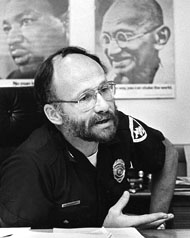
I served over 20 years as the chief of police in Madison (WI), four years as chief of the Burnsville (MN) Police Department, and before that as a police officer in Edina (MN) and the City of Minneapolis. I hold graduate degrees from the University of Minnesota and Edgewood College in Madison. I have written many articles over my years as a police leader. After retiring from the police department, I answered a call to ministry, attended seminary, and was ordained as a priest in the Episcopal Church. After almost 30 years serving in and leading two Episcopal Churches in the Diocese of Milwaukee, I am "sort-of" in the process of retirement. Life is good.
View all posts by David Couper
4 Comments
Edmonton should be congratulated for the course and academic partnership, but remember the gold standard here in the United States is having your department officers attend in the 5 day Crisis Intervention Team training.
I agree as a CIT officer this is the gold standard. But Police Officers shoud not have to dela with this problem in the first place, It is much better to handle mentally ill people with out the use of law enforcement unless there is no choice due to the threat of violence.
But since that will never happen what we need is training with groups that deal with Mentally Ill people for them to better understand our roles, and what we can and can not do. Often we are called when it is too late and the person is ramped up and we are forceed to use force.
Or due to the lack of beds we (Law Enforcement) are constantly forced to come up with new and creative solutions to the same old problem. This is a issue that society as a whole needs to address and should not be done at the Law Enforcement Level but more of the Law Maker Level.
That’s right. What we did in Madison was jointly train with county mental health workers in a team approach to intervention. It worked. But as you know, police will always be called into these situations because people get nervous when folks don’t act in ways they expect. The proper handling of the mentally ill in our society will continue to be a major task for our nation’s police. I am afraid there is no delegation possible here.
Back in the 1960s, Governor Reagan shut down the mental state hospitals so he could save state money; however, he promise the counties that they would be getting money from the state government to fund their mental health programs. Guess, what Reagan never fulfilled his promise at all.

 Improving Police: A Necessary Conversation
Edmonton should be congratulated for the course and academic partnership, but remember the gold standard here in the United States is having your department officers attend in the 5 day Crisis Intervention Team training.
LikeLike
I agree as a CIT officer this is the gold standard. But Police Officers shoud not have to dela with this problem in the first place, It is much better to handle mentally ill people with out the use of law enforcement unless there is no choice due to the threat of violence.
But since that will never happen what we need is training with groups that deal with Mentally Ill people for them to better understand our roles, and what we can and can not do. Often we are called when it is too late and the person is ramped up and we are forceed to use force.
Or due to the lack of beds we (Law Enforcement) are constantly forced to come up with new and creative solutions to the same old problem. This is a issue that society as a whole needs to address and should not be done at the Law Enforcement Level but more of the Law Maker Level.
LikeLike
That’s right. What we did in Madison was jointly train with county mental health workers in a team approach to intervention. It worked. But as you know, police will always be called into these situations because people get nervous when folks don’t act in ways they expect. The proper handling of the mentally ill in our society will continue to be a major task for our nation’s police. I am afraid there is no delegation possible here.
LikeLike
Back in the 1960s, Governor Reagan shut down the mental state hospitals so he could save state money; however, he promise the counties that they would be getting money from the state government to fund their mental health programs. Guess, what Reagan never fulfilled his promise at all.
LikeLike