
When Policing Goes Right
A Personal Story and “Customer Feedback”
As most aging, white people, I have had little contact with police since my retirement 25 years ago.
And you know I frequently write about what police need to do on this blogsite. So this past week, while driving home mid-day from Madison, I made bad mistake and did not realize I should be changing lanes due to road construction. In doing so, I clipped the front bumper of a large truck scraping and damaging the right rear of my vehicle.
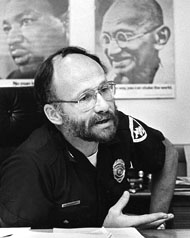
The truck driver was angrily shouting at me as I tried to apologize. “I’m calling the police,” he threatened. “Okay, let’s wait.” In a short period of time, Officer Gonzalez from the Fitchburg Police Department arrived and exercised a classic example of practicing Procedural Justice which is based on four central principles:
1. Treating people with dignity and respect.
2. Giving citizens a voice during encounters.
3. Being neutral in decision making.
4. Conveying. trustworthy motives.
Why is Procedural Justice important? According to the theory, if people feel they are treated in a procedurally fair and just way, starting from the very first contact, they will view those in authority as more legitimate and respect them more. And this makes the job and function of police not only easier, but more effective.
And this not only applies to police, but in every situation where there is an authority/power gap in the contact and not just in policing. It applies to all of those interactions and transactions when someone has the power/authority to help you out and/or make the contact easier for you.
I am sure he didn’t know who I once was. He treated me and my wife with dignity and respect, asked if we were injured, what happened, and apologized when it seemed there was some paperwork to do. His approach conveyed respect of him and trust in his decisions.
Shortly, I was given a copy of the accident report and information I would need to contact my insurance agent and submit a claim. Additionally, I was given a copy of a citation for “unsafe lane deviation” and an explanation as to what my options were.
Thanks to some positive technological innovations, I received a copy of the accident report and did not have to show up at the police records desk as it was in the past to get a copy and I also received a legible copy of the citation which explained all my options.
That’s improvement on the technological side of policing and the officer’s demeanor demonstrated that a lot of what I have been preaching and teaching about in Improving policing had, at least in this random event, been incorporated.
An unpleasant situation made better by a proper police response. I went home and contacted my insurance agent, reflected on my bad decision-making in that traffic situation (how embarrassingly stupid and how I could have endangered my beloved wife!), and so I mailed a check to the Clerk of Courts.
Good work, Officer Gonzalez, and your demonstration of how most police operate today (at least in our area).
And yes, I pledge to be more careful!
Now to negotiate the car-repair world and getting a loaner car. I’m afraid I might have a different “customer” experience.
—————————
For more about how police and their leaders can get “real time” customer feedback, check out Open Policing.

 Improving Police: A Necessary Conversation
I had a very similar experience in that area David when heading back to Platteville in heavy afternoon traffic. The lane just seemed to disappear and I cut off some guy behind me trying to avoid the barricade. “Sorry buddy” whoever that was. No damage but he was understandably pissed off. The way they manage traffic and the construction that seems constant up there is a great reason to avoid Madison entirely.
LikeLike
Life’s occasional hard lessons… it’s fall (as we used to say) time for football, and road construction!
LikeLike