
Infidelity. Unfaithfulness to a moral obligation, trust, or duty; disloyalty.
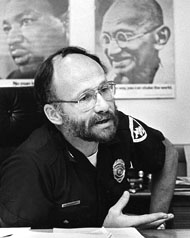
I write this in my mid-80s. I have practiced the craft and art of policing for over 30 years and, for another three decades, carefully observed those who continued the practice. I am left with the feeling that what has happened among our nation’s police is a continuing act of infidelity; that is, a failure of the moral obligation of our police to “protect and serve” everyone; especially those who depend upon them for peace, safety, and justice.
Like a marriage, infidelity in a relationship can be overcome, and trust restored, but it takes commitment, time, and effort on both parties. The infidelity of our nation’s police has yet to be fully understood as the anger as a result of that infidelity is unleashed in collective rages of violence and property damage. We (again) witnessed it happened nation-wide when George Floyd died at the hands of police in Minneapolis in May of 2020. I have seen few efforts across the nation to effectively respond to this cry and renegotiate the necessary civic contract between police and those whom they serve. Infidelity continues without repair.
For those of you who live in wealthy cities and suburbs, you may not understand what I am saying because you have little contact with your police and those contacts which you may have had were of a positive and helping nature. I submit that may be the case, having begun my career in a wealthy, urban suburb, I was strongly coached in being fair and respectful to all persons; especially those who lived within my jurisdiction.
When I later joined a much larger police department which served a central city with a significant number of persons of color and those who occupied a lower socio-economic status, the same expectation to be courteous and fair from those who trained and supervised me was not present.
Why do I say this? You don’t have to be a close observer of police in America to understand there has occurred a loss of trust between citizens and their police over the past half century. And when those who have the most contact with police (persons of color and those who are poor), the loss of trust is even greater. A February 2023 report by Forbes revealed only 45% of surveyed American adults are confident in the police, down 3% points from the previous low of 48% following George Floyd’s murder in 2020. This is the lowest level of confidence in police that has ever recorded, down 5% from from the first survey in 2014.
Confidence in the police fell among both Black and white people surveyed since 2010, but the difference in confidence by race is growing, from an average difference of 25 percentage points from 1993-2013 to 30 points from 2014-2019. Black and white people surveyed diverged most sharply in 2020–37 percentage points–after Floyd’s death, with 19% of Black Americans expressing confidence in police compared to 56% of white Americans.
A great deal of that loss has occurred in my opinion because of the reluctance and resistance of police to get control of questionable uses of force, to raise the bar in how and when deadly force is used.
You may notice my reluctance to talk about “law enforcement.” I do this because the primary function of police should not be the enforcement of rules, but rather the difficult task of keeping peace in the city, being fair and just (see Procedural Justice) in their day-to-day activities is really the essence of policing; an essence that is historically over 150 years old (see Sir Robert Peel’s Nine Principles of Policing).
Being fair and just in a diverse, free, and democratic society is not an easy task nor is it for the faint-hearted. It is difficult and requires the best and brightest among us to do it well. So what do I mean? Given my observation that an “infidelity” has occurred in most of our nation’s urban areas, what can be done to improve this important civic relationship?
First, let us not forget that to effectively and fairly “keep the peace” involves the consent of those governed; the most powerful idea in American policing to respond to that need was the idea of “community-oriented” policing. Later, the idea was further developed by me and others in Madison, Wisconsin was to be “neighborhood-oriented” in its approach. Our motto then was “Closer to the people we serve.”
After all, it makes sense that those policed should have major input into how the job gets done and with how much force to gain compliance. Then who among us can be expected to do such a complex and dangerous job as this?
After my retirement from police leadership, I was moved to write a book in 2010 and went on to continuously author these blogs on improving police a year later. My mission was to help improve the function of policing our democracy. I want to highlight “democracy” here because policing a society that is not free is rather easy. Just look at how non-democratic countries go about the task – it’s all about force and threat of force. When police do not have the support and trust among the people with whom they work, their job is not only dangerous, but quite ineffective as they constantly have to quell rebellion.
Let us now go back to my earlier question, “Who among us can do such a difficult and important job?” In my book and blog, I tried to answer this question by stressing the importance of police selection, training, supervision, mental health, and career-development. I made efforts to describe this kind of police officer in my book and in the most popular blog I have written so far, “What is Modern, 21st Century Policing?” (May 2016):
++++++++++++++++++++
What is Modern, 21st Century Policing?
Modern, 21st century policing is CONSTITUTIONAL; that is, police strongly protect the civil rights guaranteed by our Constitution and especially its Bill of Rights, with particular attention to the 1st and 4th Amendments [1].
Modern Policing is JUST AND RESPECTFUL, that is, police practice these critical dimensions with those whom they come into contact:
- Citizens perceive their side of the story has been heard.
- They are treated with dignity and respect.
- The decision-making process used by police is seen to be unbiased and trustworthy.
- Citizens comprehend how decisions concerning them are made.
- They understand police are interested in their personal situation.[2]
Modern Policing is CONNECTED; that is, the department and its employees are committed to working closely with the community it polices. They see themselves as co-workers with the community in preventing and properly responding to crime and disorder.
Modern Policing uses FORCE JUDICIOUSLY; that is, police see themselves carefully, wisely, and proportionally approaching situations in which physical force may be necessary. They practice “Peel’s Nine Principles of Policing”[3]; especially these three:
- The ability of police to fulfill their mission is dependent upon community approval and respect (Principle 2),
- Realize that cooperation from the community is inversely related to the amount of force police must use to accomplish their mission (Principle 4), and
- Only use force only when persuasion, advice, and warnings are insufficient (Principle 6).
Recently the Police Executive Research Forum (PERF)[4] along with 200 police chiefs across America issued the “30 Guidelines for Police Use of Force[5].” The first five guidelines plus number six are critically important for the controlled use of force and the re-building trust in our nation’s police:
- The sanctity of human life should be at the heart of everything an agency does.
- Agencies should continue to develop best policies, practices, and training on use-of-force issues that go beyond the minimum requirements of Graham v. Connor.[6]
- Police use of force must meet the test of proportionality.
- Adopt de-escalation as formal agency policy.
- The Critical Decision-Making Model provides a new way to approach critical incidents.
- Duty to intervene: Officers need to prevent other officers from using excessive force.
Modern Policing is TRANSPARENT AND ACCOUNTABLE; that is, without compromising on-going investigations, police are to be publicly open in their actions, their policies, practices, discipline, and training methods — and when and how often they use force. Within that transparency is the high expectation that police will be accountable to the citizenry in their actions, activities and practices and conduct collaborative policing practices that are close to the people served and able to listen to the voices of those served.
Modern Policing is CURRENT — Using “best-known methods” of policing, committed to continuous improvement, following and applying research regarding effective policing practices, and implementing the recommendations of the 2015 President’s Commission on 21stCentury Policing.[7] A modern police organization is also a learning organization that is committed to teaching others how to improve and achieve.
- Having a modern, 21st century police organization is not impossible for a committed people and their police to achieve.
- Such a goal is both possible and necessary.
- If we work together, we can have the kind of police of which we all can be proud, trust, and support.
- It is time to repair this important civic relationship!
++++++++++++++++++
In short, hiring, training, fielding, and leading the kind of police in which a democracy thrives means having police in your community who are smart, college-educated, diverse, emotionally intelligent, and are committed to the service of others. Who carefully are emotionally controlled their use of force in their work, well-trained and remunerated, and led by mature, collaborative, servant-leaders.
While my professional organization, the Police Executive Research Forum, went to great effort in March, 2016 to recommend standards in their “Guiding Principles of Use of Force,” the implementation of these principles was ran aground after President Barack Obama left office.
Since that time, the number of citizens killed by police has remained constant (around 1,000) since the days of Ferguson up to the present day. A rate that is far above our European allies (see below).
I submit that the key element in restoring trust of police among all American citizens is for more restraint in police use of deadly force.
5 Facts About Police Use of Force in America
- Not one state complies with international law and standards on the use of lethal force by police. (See European standards including “absolute necessity” with regard to using deadly force.)
- In many cases, officers have shot people multiple times, indicating use of force that was neither necessary nor proportionate. Michael Brown, for instance, who was unarmed, was shot six times.
- According to Mapping Police Violence, in 2019 Black people were 24% of those killed by the police, despite being only 13% of the population.
- A 1996 law authorized the US Department of Defense to provide surplus equipment to law enforcement agencies. This has resulted in police having equipment designed for military use to be deployed at protests.
I am focusing on the use of deadly force as one of the primary reasons many people do not trust their police. Here’s what the rate of police use of deadly force is in the U.S. compared to other democratic governments.
Rate of civilians killed by the police annually in selected countries, as of 2019 (per 10 million residents)
United States 33.5
Canada 9.8
Netherlands 2.3
Germany 1.3
England and Wales 0.5
Japan 0.2
There is a huge difference in the use of deadly force among the world’s nations. One cannot look at these data without wondering how the proliferation, and easy access to obtain firearms in America, skews this figure. The lack of our willingness to control firearms in our nation no doubt adds not only to the deaths of many of our citizens, but our police as well. In 2021, according to Pew Research, the most recent year for which complete data is available, 48,830 people died from gun-related injuries in the U.S. In 2022, 118 officers died in the line of duty. Sixty of those officers were killed primarily by firearms.
There is great and important work ahead of us if we, as a nation, are to be who we say we are in the beliefs we voice and our founding documents. Godspeed!
+++++++++++++++++
ENDNOTES
[1] Amendment I: Congress shall make no law respecting an establishment of religion or prohibiting the free exercise thereof; or abridging the freedom of speech, or of the press; or the right of the people peaceably to assemble, and to petition the government for a redress of grievances. Amendment IV: The right of the people to be secure in their persons, houses, papers, and effects, against unreasonable searches and seizures, shall not be violated, and no warrants shall issue, but upon probable cause, supported by oath or affirmation, and particularly describing the place to be searched, and the persons or things to be seized.
[2] T. R. Tyler, Why People Obey the Law. Yale University Press, 1990.
[3] 1. The basic mission of police in a free society is to prevent crime and serve as an alternative to military force and repression. 2. The ability of police to fulfill their mission is dependent upon community approval and respect. 3. Police must secure the willing compliance of the community and their voluntary observance of the law. 4. Cooperation from the community is inversely related to the amount of force police use to accomplish their mission. 5. Police must be impartial, service-oriented, courteous, friendly to all community members, and willing to sacrifice themselves in the protection and preservation of life. 6. Physical force is to be used only when persuasion, advice, and warnings are insufficient. 7. Police are to be recruited from the community and the community is, in fact, the police. Both police and community members are responsible for the welfare of the community. 8. Police are not to judge, convict nor punish; that is the role of the judiciary. 9. The effectiveness of police is to be measured by the absence of crime and disorder in the community, not by their activities and actions. (Revised by author.) See original: https://www.durham.police.uk/About-Us/Documents/Peels_Principles_Of_Law_Enforcement.pdf
[5] http://www.policeforum.org/assets/guidingprinciples1.pdf
[6] https://supreme.justia.com/cases/federal/us/490/386/
[7] http://www.cops.usdoj.gov/pdf/taskforce/taskforce_finalreport.pdf

 Improving Police: A Necessary Conversation
What a profound statement, wise, judicious and humane. I wish it were taken to heart and more widely followed throughout our land, this democracy of ours “if we can keep it1” Merry Christmas to you and all of us, David, in the spirit of him whom we would do so well to serve better.
Your classmate and devoted admirer, Hugh
LikeLike
Thanks, Hugh, “С Рождеством;” always a blessings to hear from you. “
LikeLike