
Paradox: Echoes of Reform and the Minneapolis Police
“Historian Yohuru Williams explores the history of reforming the Minneapolis Police and how George Floyd’s murder was a century in the making. The streaming series is a compelling blend of deep research, candid interviews, and rare archival footage. Paradox peers into the past of mayoral politics, community activism, and police union pushback to better consider our public safety future…”
After viewing the series —Whew!
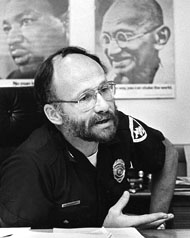
Friend and former colleague Bill Mavity recently alerted me to a remarkable historical documentary series, “Paradox: Echoes of Reform and the Minneapolis Police.” It opened a flood of memories for me — memories of my early years in policing and the department where I began my career. Bill plays a major role in accurately describing our era.
I served seven years with the Minneapolis Police Department, first as a patrol and training officer and later as a detective. Those were turbulent years — years of racist policing, civil unrest, of change resisted and reform demanded. The 1967 riot remains etched in my memory, not just for the violence but for the lessons it forced us to face.
At the time, a number of us were part of Lambda Alpha Epsilon, a national fraternity of police professionals calling for reform and improvement. We were young, idealistic, and determined to raise the standards of our profession. Across the Twin Cities, many of us were working toward college degrees and sharing a vision of fair and equitable policing — a vision still elusive today.
Bill and I joined the department in 1962, members of the same recruit class. By 1969, both of us had moved on. Bill went on to lead the criminal justice section of the Twin Cities Metropolitan Council, later earned a law degree, practiced in Hennepin County, and even ran for sheriff — courageously — against a long-entrenched (and entrenched) incumbent.
As for me, I completed my education at the University of Minnesota, was appointed chief of police in Burnsville in 1969, and four years later was called to lead the department in Madison, Wisconsin — where reform, education, and community trust became the foundation of my work.
My Minneapolis years are covered in Part II of this film essay — a stark reminder that politics and policing must never become one and the same. Unfortunately, in Minneapolis they most always did. In my era, the contentious president of the police union, Charles Stenvig, was even elected mayor of the city — a troubling symbol of just how intertwined the two had become.
Over the years, I’ve often wondered why a city like Minneapolis — prosperous, educated, and full of good people — has struggled so persistently with its police department. I’ve known many outside chiefs who tried to reform it, including the brilliant and principled Tony Bouza, yet even he could not root out the culture that continues to plague it today — as the world saw again with the murder of George Floyd.
Looking back, I sometimes wonder if I could have made a difference had I stayed.
Realistically — probably not.
But I do know this: the struggle for fair, accountable, and community-based policing must never end. Reform is not an event; it’s a calling — one that each generation must take up again.
And a great city should always field and support a great police department. I’m still waiting for Minneapolis to do so and sustain the effort.
_______________________________
View Part Two HERE.

 Improving Police: A Necessary Conversation
“Over the years, I’ve often wondered why a city like Minneapolis — prosperous, educated, and full of good people — has struggled so persistently with its police department. I’ve known many outside chiefs who tried to reform it, including the brilliant and principled Tony Bouza, yet even he could not root out the culture that continues to plague it today — as the world saw again with the murder of George Floyd.”
That is what kind of bothers me is how even in liberal blue cities and states always been unable to reform their police departments considering the fact that lots of cops are not well educated so it shouldn’t be impossible to get rid of them. Maybe if there wasn’t so much political, judicial, DA and corporate corruption, you could reform the police because that is how police corruption thrives when the folks at the political, economic, and judicial top positions hold the keys to reforming the police. It also show that police officers play politics in preventing genuine police reforms despite the fact that you have people like solarp2016 always proclaiming that the police are impartial.
Maybe there should be a law stating that if you are a conservative, you are not allowed to join the police department
LikeLike
This documentary sounds like a vital, yet painful, historical excavation. Your reflections, informed by personal experience during those turbulent 1960s years, highlight a core truth: policing reform is a generational calling, not a singular event.
The cyclical nature of police union power and political entanglement in Minneapolis—epitomized by Charles Stenvig’s election—shows how deeply entrenched resistance can be. It’s disheartening that the idealism you and Bill Mavity shared in 1962 remains elusive today.
The key paradox is clear: how does a wealthy, educated city fail repeatedly to sustain reform? The answer lies in the persistence of culture over policy.
Given that culture and political power have repeatedly blocked external police chiefs like Tony Bouza, what specific, non-police agency—city council, community board, or otherwise—needs to be empowered to permanently dismantle the system’s resistance?
LikeLike
As many of us have learned when it comes to improving the task of policing — culture is difficult to change. And what I learned in Madison that if I was serious about changing the culture of the police department I needed 20 years to do it. Did it change? Did it improve? I think so and many of the changes we implemented from 1973-1993 remain today. But you can never change police subculture unless you have a core of ethical, educated, committed police leaders within the ranks.
LikeLiked by 1 person