
What Happens When Law and Decency Collapse?
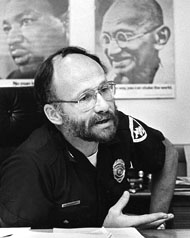
As a retired police leader, I am outraged that our local government and police stand by while masked, unidentified federal agents abduct non-violent individuals and even children—people whose only “crime” is seeking citizenship in our country. These are not criminals or threats to public safety. They are families, asylum seekers, and human beings trapped in an administrative maze that fails them at every turn.
The system they face is a bureaucratic nightmare: slow, inconsistent, and often cruel. Instead of offering clarity or compassion, it punishes confusion with detention, arrest, bail, and deportation. Lives are destroyed not because of violent acts or moral failures, but because of paperwork delays, administrative errors, and the indifference of those in power. This is not justice—it’s systemic failure masquerading as law enforcement.
I spent three decades in policing. I know the sacred trust that comes with wearing a badge and the power—and danger—of authority exercised without transparency or accountability. That’s why this moment feels so chilling. Masked agents, operating without identification or accountability, dragging people into unmarked vehicles, is not policing—it’s state-sponsored fear. When law enforcement forgets who it serves, democracy itself is at risk.
[And what of the rest of us? How do we, as citizens, “prove” our citizenship when confronted by these same unidentified agents? Do we now live in a country where we must carry passports in our pockets to prove we belong? That is the stuff of authoritarian regimes, not the United States of America.]
This is an outrageous and dangerous turn of events—a symptom of a power-hungry administration unmoored from both law and decency. The moral test of a nation is not how it treats the powerful, but how it treats the vulnerable. We are failing that test.
It is time for local leaders, police chiefs, sheriffs, and elected officials to stand up and say, “Not here.” It is time to reclaim the principles of policing rooted in service, accountability, and respect for human rights. Silence is complicity—and those of us who once wore the badge have a duty to speak out.
Local government officials must resist this assault. Here’s some ideas —
Concrete, Nonviolent Measures Local Police Could Adopt
To Keep Streets Calm While Protecting Civil Rights Which Are Afforded ALL Persons
- Require identification. Insist federal agents operating in the jurisdiction display agency ID, their names and badge numbers (and be photographed). Do not permit the wearing of masks that obscure identification.
- Insist on judicial warrants for private-entry. Refuse to assist any entry into homes or private property absent a signed judicial warrant (not administrative paperwork).
- Refuse to enforce administrative detainers. Do not honor ICE detainers that lack probable cause or judicial backing; don’t convert civil administrative actions into local criminal holds.
- Document everything. Ensure video/audio documentation (body cams, dash cams, video teams) of all federal actions. Publicize redacted reports quickly to reduce rumor and panic.
- De-escalation posture. Train/prepare officers to act as crowd-management and safety escorts rather than adversaries — keep uniformed officers visible, calm, and non-provocative. Slow down the process.
- Legal observers & interfaith presence. Invite neutral legal observers, clergy, and interfaith teams to accompany affected communities — their presence reduces escalation and increases accountability.
- Clear public communication. Mayors/chiefs issue a short public statement: what local policy is, what residents should do, and what the city will and will not do. Reduce confusion and panic.
- Designated liaison. Local law or mayor’s office designate a single liaison for federal agencies — centralize communications to avoid on-the-spot surprises.
- Medical/shelter contingency. Pre-position legal aid, medical teams, and safe shelter points so community members have options other than flight or confrontation.
- After-action transparency. Commit to prompt, public after-action reports and legal follow-up if rights were violated — pursue civil remedies as needed.


