
Part Three: What Should a Leader Say?
After a fatal police shooting, most chiefs reach for the same script. They express sympathy, point to the law, maybe talk about the criminal record of the victim, ask for patience while the investigation proceeds, and wait for the storm to pass. Sometimes the storm does pass. The trust it carried away does not easily come back.
There is another way, however. A chief who recognizes that the department has drifted can stand before the community and say so, without judging any officer, without prejudging any case, and without confessing to wrongdoing. The chief can take responsibility for the system, raise the department’s standard, make the necessary corrections and ask the community to hold him or her accountable.
That takes courage, especially for a chief who rose through the ranks of the very system now in question. But such a chief may be best placed to fix it. Here is what I believe a chief could say.
A model statement
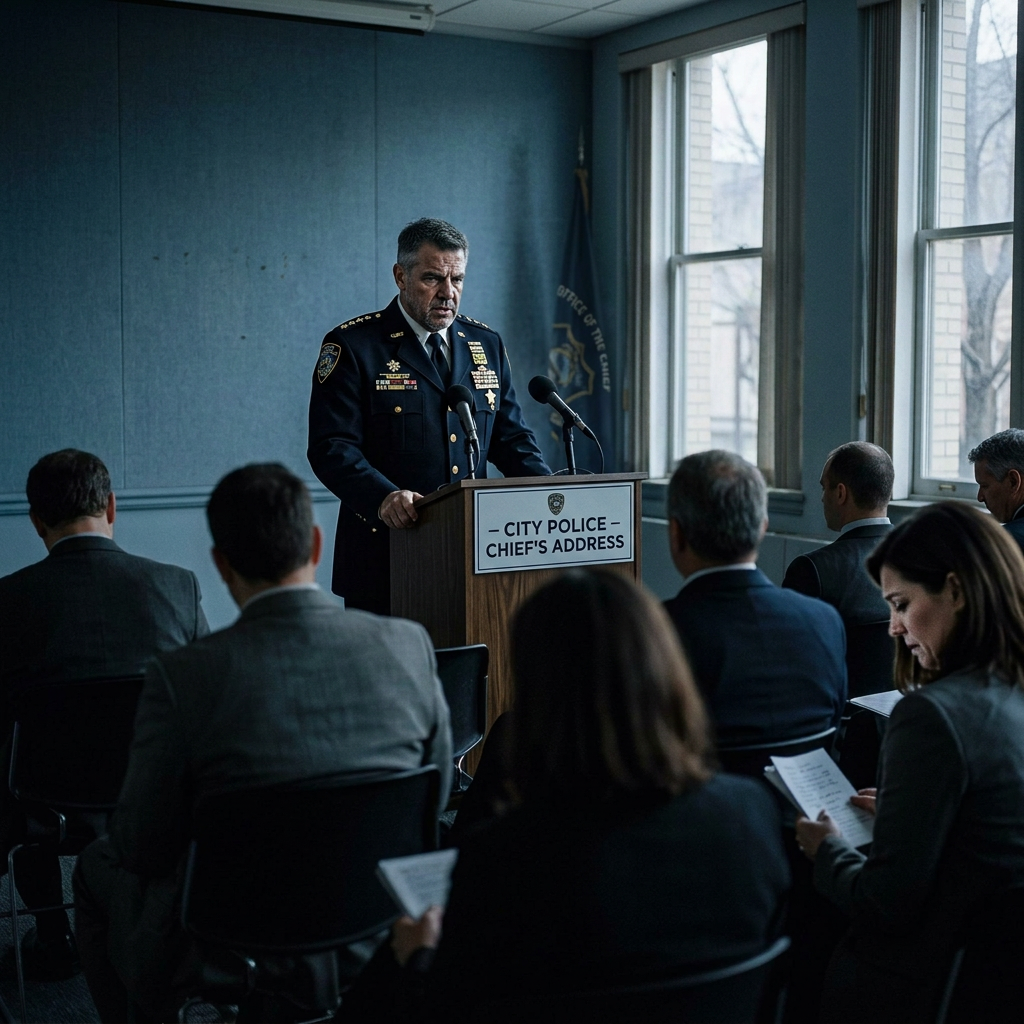
“I want to begin by noting that we do many things for this city. We investigate crimes, step into disputes before they turn violent, protect your right to protest, keep our streets safe and regulate the flow of traffic . And in doing all of that, we hold an authority few others in a free society hold: the authority to use force, and in the gravest moments, to take a life to save a life. Nothing in policing matters more than how we use that authority.
“I was hired, trained, and promoted by this department. I am a product of its system. So when I examine that system today, I am examining the system that made me. I do it because this department taught me two values: to continuously improve, and honor the sanctity of life.
“Nearly two hundred years ago, the founders of modern policing in London taught that the police are the public and the public are the police, and that the more police rely on force, the less trust and cooperation they receive.
“Over the years, officers of this department have taken lives in encounters that were found to be lawful. Those cases cost our city millions of dollars, brought protest and property damage to our city, and left wounds that have not healed. For too long, we took refuge in the word lawful. We did not listen closely enough when our community told us that something can be lawful and still be awful.
“We were told this years ago, by an outside study of our department and by our own city’s internal review. Oversight came from outside because we did not lead that change ourselves. We should have. And we work every day in a city with continuing deep racial disparities. We did not create them, but every racial encounter either deepens those disparities or begins to heal them.
“I am not passing judgment on any officer, and I am not prejudging any case under review. What I am saying is that our system, our policy, our training, our supervision, and our review, has not given this community or this department the outcomes we all want. That system now is mine to change.
“So today I am announcing that this department will raise its standard for deadly force from the legal minimum of “objective reasonableness” to “absolute necessity,” the standard used across much of the democratic world. Deadly force will remain available when a life truly depends on it. But it will be our last resort, and we will train every officer to make it so. I am forming a work group of officers and community members to write the policy and the training, and I am directing a non-blaming Sentinel Event review of our use of force.
“I know promises are easy and results are what counts. Within 30 days, I will name the work group. Within 90 days, I will issue our new policy and publish it. Within six months, every officer will have begun training to meet it, and I will report our progress to you. Within one year, I will publish a full accounting: how often we used force, how many officers and residents were injured, and what you told us in a survey of the people we serve. If I miss these dates, I expect you to call me out.
“This is not an admission of wrongdoing. It is a decision to move from blame to improvement. I ask for your patience, your support of me, the men and women of this department, and your help. We can do better. We will. This is my promise. Thank you.”
__________________________________________
Why this works
A statement like this does what the usual script cannot. It names the problem honestly. It locates responsibility in the system, which protects officers rather than scapegoating them. It raises the standard rather than defending the old one. And it gives the community dates it can hold the chief to. Trust is not rebuilt by words alone, but it cannot begin without them.
City leaders and citizens should ask: Has our chief said anything like this? If not, why not?
Next: Getting Back on Course. What a department, its city, and its citizens can do to restore trust.


