
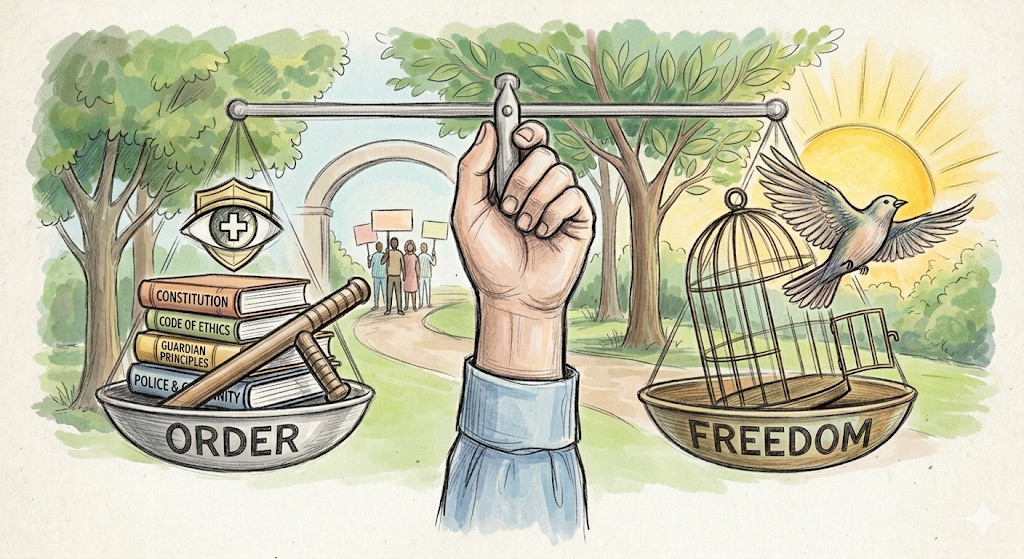
In a free society, the legitimacy of policing rests not on power, but on the consent and cooperation of the governed. When we look at China’s increasing influence in the Pacific—it is easy to view these shifts only through the lens of strategic competition.
However, a “security-first” mindset often misses the mark, whether in global affairs or local neighborhoods.
In the Pacific, island nations are signaling that their true security needs are holistic: climate resilience, public health, and addressing domestic crime. When outside powers approach these nations solely as a matter of keeping public order, they fail to build the trust necessary for genuine and lasting partnership.
The lesson is clear: effective policing requires listening to the people served. Just as international relations require moving beyond defense pacts, police agencies in a free society must move beyond “warrior” mentalities to embrace their role as guardians.
True order is built when we engage as equal stakeholders, prioritize the needs defined by the community, and act with the humility to collaborate rather than command.
It reminds me of an interchange I once had with some elected officials who were demanding that we, their police, eliminate crime.
I responded by saying that I was aware and knew of such methods and strategies, but if they were implemented you won’t like it and, besides, it’s not who we are and it’s illegal.
Some of them got the point.
It is always a balance to be tempered by our Constitution and rule of law.
More can be found in this news article HERE.


