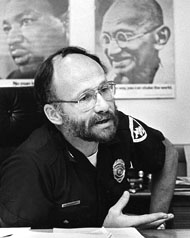
It is a bitter irony to watch the cycle of crisis and reform churn in Minneapolis—a city in which I once policed her streets for seven years: a city which seems perpetually caught in its own crosshairs.
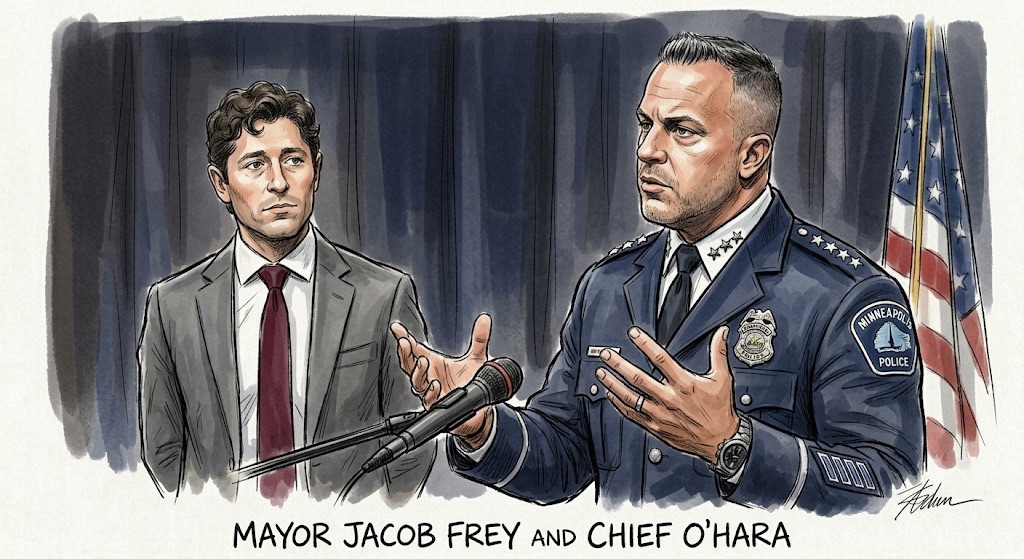
The recent resignation of Chief Brian O’Hara is more than just another administrative exit; it is a profound, sad reflection on the fragility of leadership and the broken promise of police reform.
In it, we are forced to revisit age-old, immutable truths of professional integrity: “One should not dip one’s pen in the company ink” and control one’s anger in the workplace.
Whether in the halls of Washington or local government, the rules of conduct and the boundaries between professional duty and personal entanglement exist for a reason. When those lines are blurred, it isn’t just the individual who falls; it is the entire institution’s credibility that is sacrificed.
O’Hara’s departure, triggered by findings that he interfered in an internal investigation—deleting contacts and compromising the integrity of a process he was sworn to uphold—serves as a stark reminder that trust is the currency of policing.
When that currency is devalued by poor judgment, no amount of policy writing or reform rhetoric can compensate. As we continue to navigate the difficult, necessary work of trust-filled, respectful community-oriented policing, we are reminded once again that structural change means nothing without the foundation of personal integrity.
For those interested in the breakdown of how this unfolded, the following interview provides a sober look at the investigation and its fallout:
Inside the fall of Chief O’Hara
This video offers a comprehensive breakdown of the internal investigation findings and the subsequent political fallout that led to the chief’s resignation.


