Today’s New York Times investigation highlights a disturbing and dangerous trend in American law enforcement: the rapid expansion of federal 287(g) agreements. Under this program, the Trump administration has been deputizing local police and sheriff’s deputies to act as de facto immigration agents.
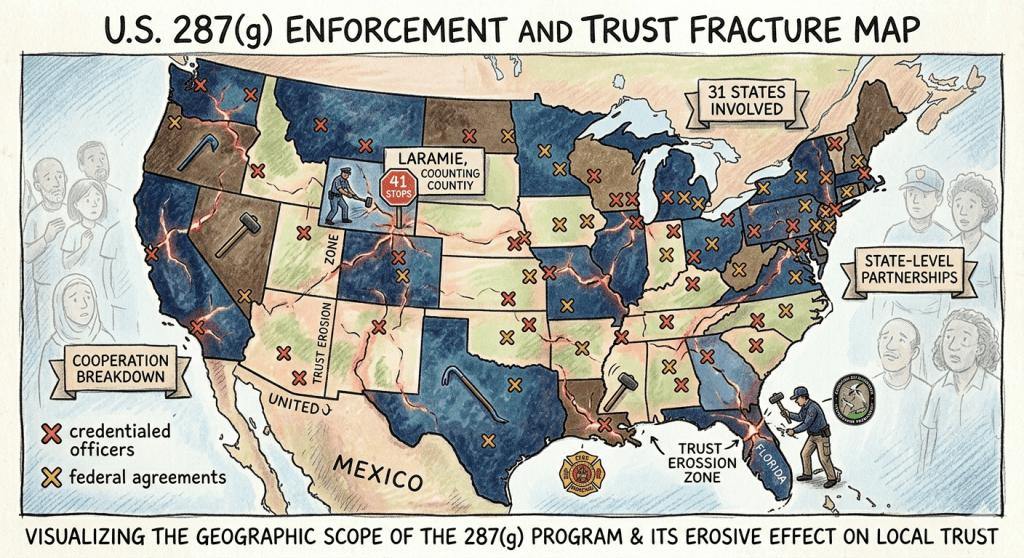
The report details how agencies—from sheriff’s departments in Wyoming to even non-traditional agencies like state fire marshals and fish and wildlife commissions—are signing on to these partnerships. By doing so, they are effectively turning routine traffic stops into federal immigration enforcement operations. In one instance, local deputies made 41 traffic stops in five hours, resulting in seven people being detained for federal immigration status checks—a move incentivized by federal cash payouts to the local departments.
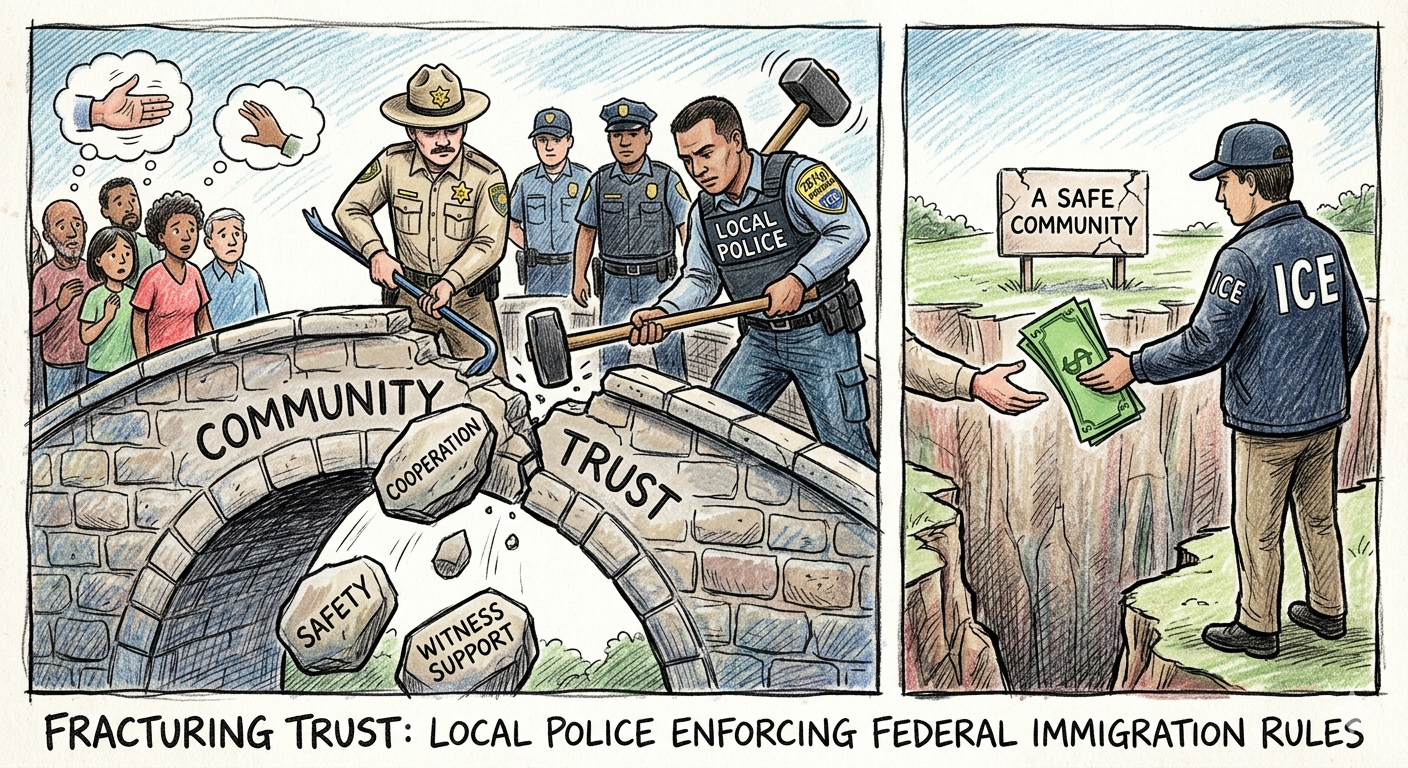
This is not what community policing in a democracy looks like; it is shameful behavior that fundamentally fractures the relationship between the police and those whom they serve — all residents, not just citizens .
When local law enforcement officers choose to act as an extension of federal civil (not criminal), laws they are not fighting crime or ensuring public safety. They are enforcing federal administrative rules. This is a profound misuse of local resources and authority.
We must be clear: a police officer’s primary responsibility in a free, diverse, and democratic society is to be fair, respected, and trusted. (Check out Procedural Justice.) Trust of police is built on the foundation that when a community member calls the police—or is pulled over for a broken taillight—the officer is there to uphold the law in the interest of public safety, not to act as a tool for mass deportation of most people caught up in our broken immigration system. Simply, it’s not the job of our local police.
Let me be clear, this does not, and should not, prevent local police from arresting dangerous persons who have violated our nation’s civic hospitality.
By engaging in rounding up those among us who are working to become citizens local police are causing irreparable harm to their own mission.
When large segments of the population—including immigrant communities and their neighbors—begin to fear that any contact with the police could lead to detention or deportation, they stop reporting crimes, they stop appearing as witnesses, and they stop participating in the vital, cooperative relationship required for safe and livable communities.
Policing in a free society demands a commitment to serving all residents, not just a select few. When local police abandon this neutrality to chase federal dollars for immigration enforcement, they sacrifice their integrity, destroy community trust, and ultimately make our neighborhoods less safe.
It is time for local agencies to stop prioritizing federal agendas over their own sworn duty to serve their local communities
————————-
The Scope of the Collaboration Problem
This collaboration is not isolated to specific border communities; it is a sprawling, nationwide effort that has fundamentally altered the landscape of local policing.
According to the New York Times, participation has exploded, with “de facto” ICE officers now operating in hundreds of cities and counties across 31 states. The program has credentialed several thousand officers—including state troopers, sheriff’s deputies, and local police—and has expanded to include unconventional partners such as Louisiana’s State Fire Marshal and Florida’s Fish and Wildlife Conservation Commission.
With nearly 2,000 total agreements currently in place, the administration is effectively using federal cash incentives to transform highway patrols and routine traffic stops into a primary front for federal immigration enforcement. By weaving these federal duties into the daily operations of local law enforcement, the government is forcing local agencies to abandon their community-focused mission in favor of acting as federal deportation agents.