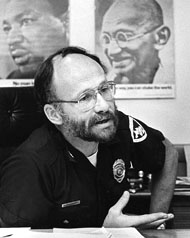
I had the opportunity as a young grad student and street-cop-on-leave to study a number of European police departments and it was life-changing: I saw women uniformed police for the first time, conflict-avoiding response to protest, and career-enhancing opportunities.
So here I am a half-century later with one of my sons joining my “Veterans For Peace” organization on a month-long tour of nine cities in China.
And thus, my now almost life-long interest in the art of policing people.
Some observations:
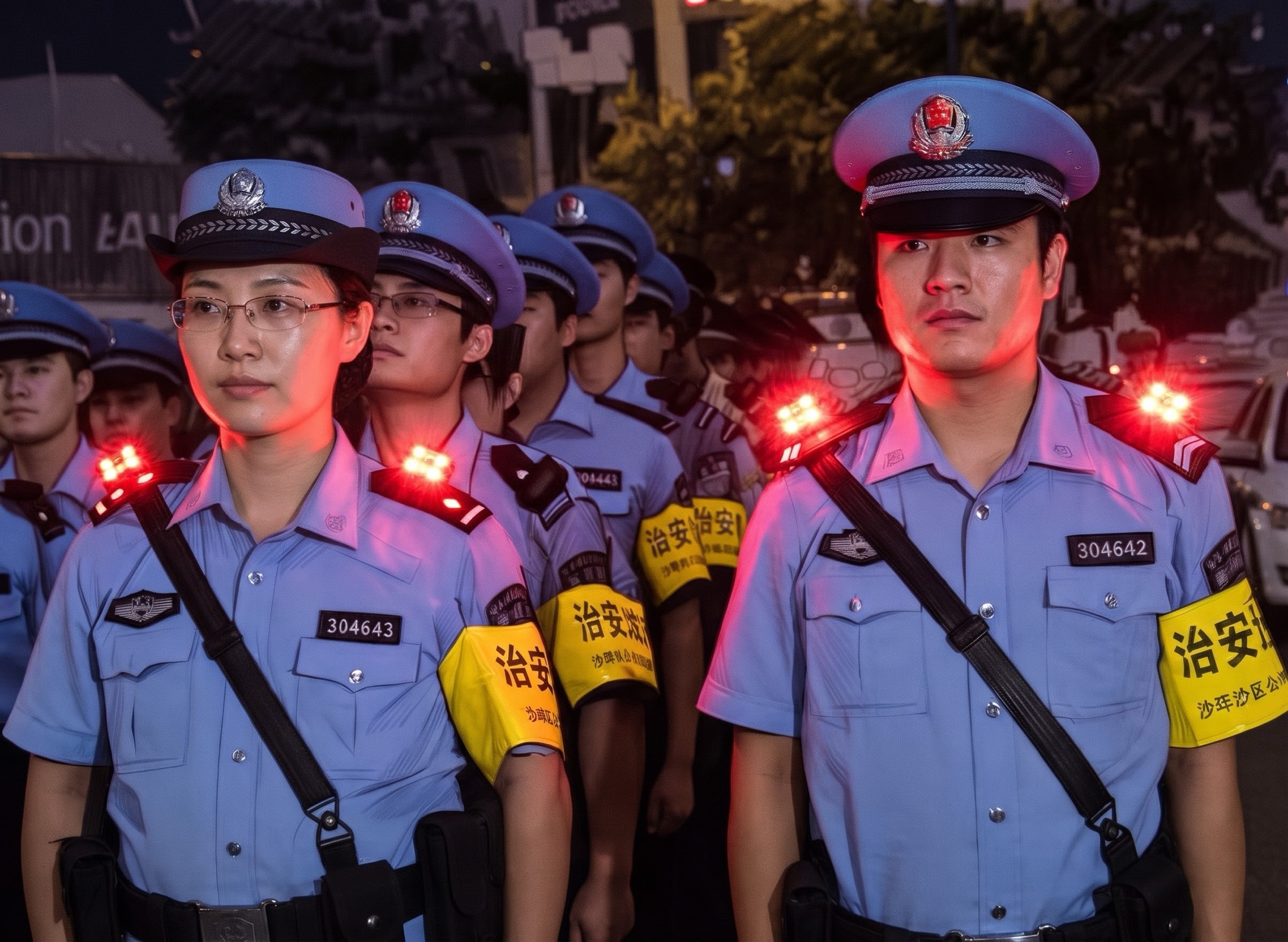
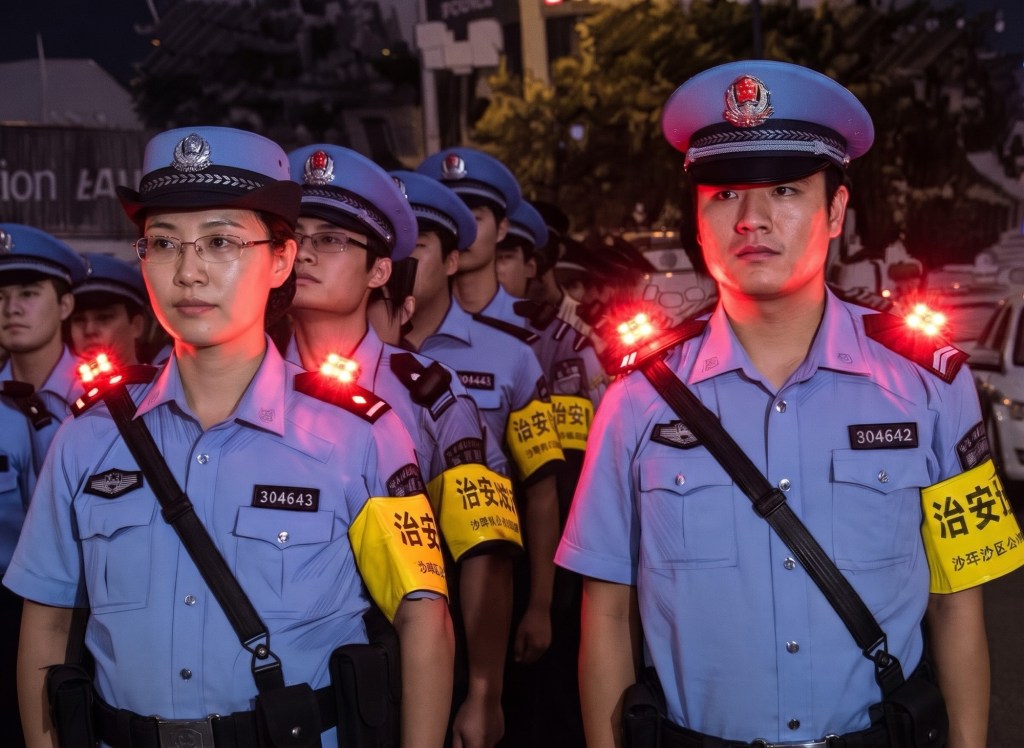
— rather than a threat, police appear to be an observable presence. For example, not only mobile, visible stations but uniformed police who wear red-blue flashing lights on their shoulders (high visibility and availability).
— welcoming contact, directional advice and even friendliness in their community contacts.
—a society in which safety is paramount, from smoke masks and fire blankets in hotel rooms to mobile fire-suppressing robots in the parks.
—an overall sense of safety and security not only in one’s possessions but also personal.
—security means community cooperation in frequent searches of person and baggage when attending public events. An intense scanning of personal ID, bag and body scans especially at national sites such as Tian’anan Square in Beijing.
So, in short, how much of your personal freedom to do what you want to do without any governmental entity restricting you?
As Americans. I would say that we value our individualism so much that we are willing to sacrifice our security by resisting governmental authority.
I don’t see a presence of homeless or addicted persons on the streets of the 20+million cities I have so far visited.
Little presence of active or unstable persons, exceptional clean streets and sidewalks, and an amazing daily commuter dance between pedestrians, bicycles and electric mo-peds.
How much individual freedom is a person willing to give up to the state in exchange for personal safety? Safety from firearm, edged weapon or terrorist attacks? Safety in one’s home and possessions? Constraints on liberty so that all can “pursue happiness?”
I sense a great alignment between our two governmental systems in the 19th century “Nine Principles” of Robert Peel — especially the opening principle “the people are the police and the police are the people.”
Though I have no data to back this up— only a feeling — is that China may have successfully implemented “community-oriented policing” according to their government and culture throughout the country.
Something to ponder…
Here’s a summary of the policing system in China beginning at the municipal level:
Municipal policing in China operates under a centralized dual-command system, where the national Ministry of Public Security (MPS) establishes professional standards, policies, and ranks, while local Public Security Bureaus answer directly to municipal party and government officials for daily operational priorities and funding.
At the neighborhood level, policing is anchored by local stations known as Paichusuo, which function less like Western dispatch centers and more as deeply embedded community and administrative hubs.
Officers assigned to these stations manage the hukou (household registration) system, mediate neighborhood and civil disputes, and oversee localized “grid management” networks—a modern iteration of community oversight that integrates neighborhood committees with advanced technological infrastructure, such as CCTV and facial recognition, to prevent crime and maintain social order.
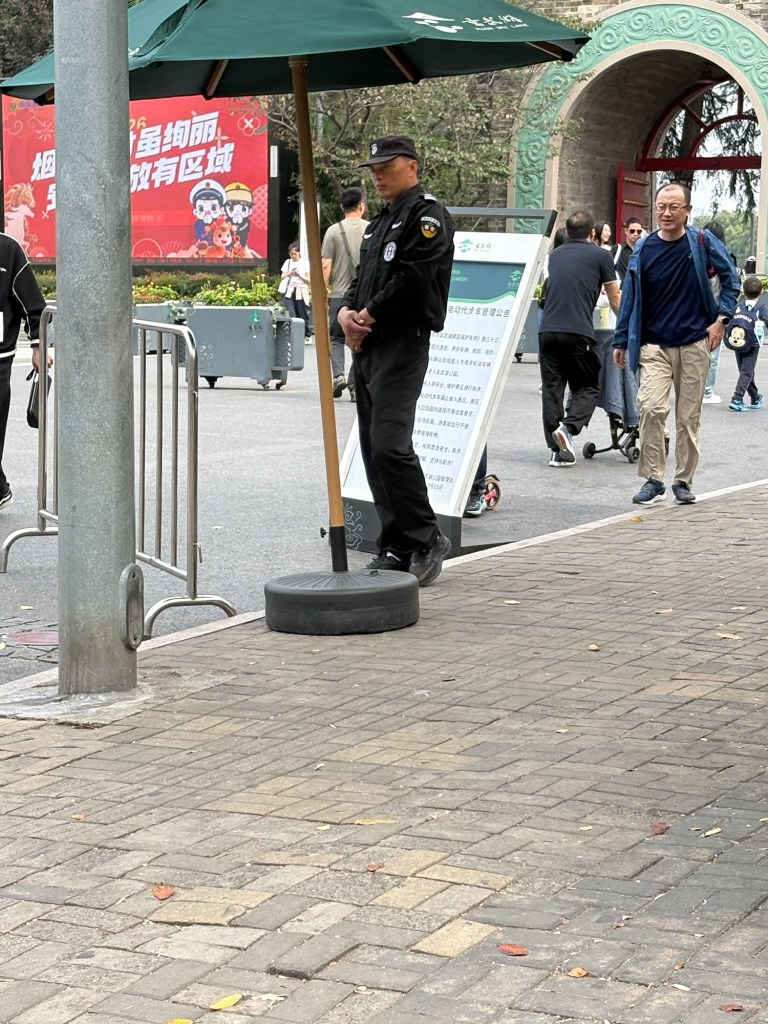
On the street, routine patrol and traffic officers are unarmed, relying on visibility, persuasion, administrative authority, and rapid backup rather than lethal force.
The regular police force is heavily supplemented by unarmed auxiliary officers (fujing), who assist with traffic control and foot patrols, alongside separate municipal bylaw enforcement officers known as Chengguan (Urban Management), who regulate street vendors, sanitation, and local ordinances. For high-risk incidents, counter-terrorism, or major crowd control, municipal bureaus deploy specialized armed SWAT units or coordinate with the paramilitary People’s Armed Police (PAP). Together, this layered approach emphasizes preventative order maintenance, low violent crime rates, and omnipresent neighborhood administration, which generally yields high reported levels of public perceived safety.
Police leadership training and assignment in China operate through a standardized, multi-tiered pipeline that blends four-year academic police universities, civil service examinations, mandatory executive academies, and a strict cross-regional rotation policy designed to prevent local corruption.
You can view my 50+ video reports from China on YouTube at https://youtube.com/@thecouperdispatch?feature=shared.


