Quality Cops Start With Quality Leaders
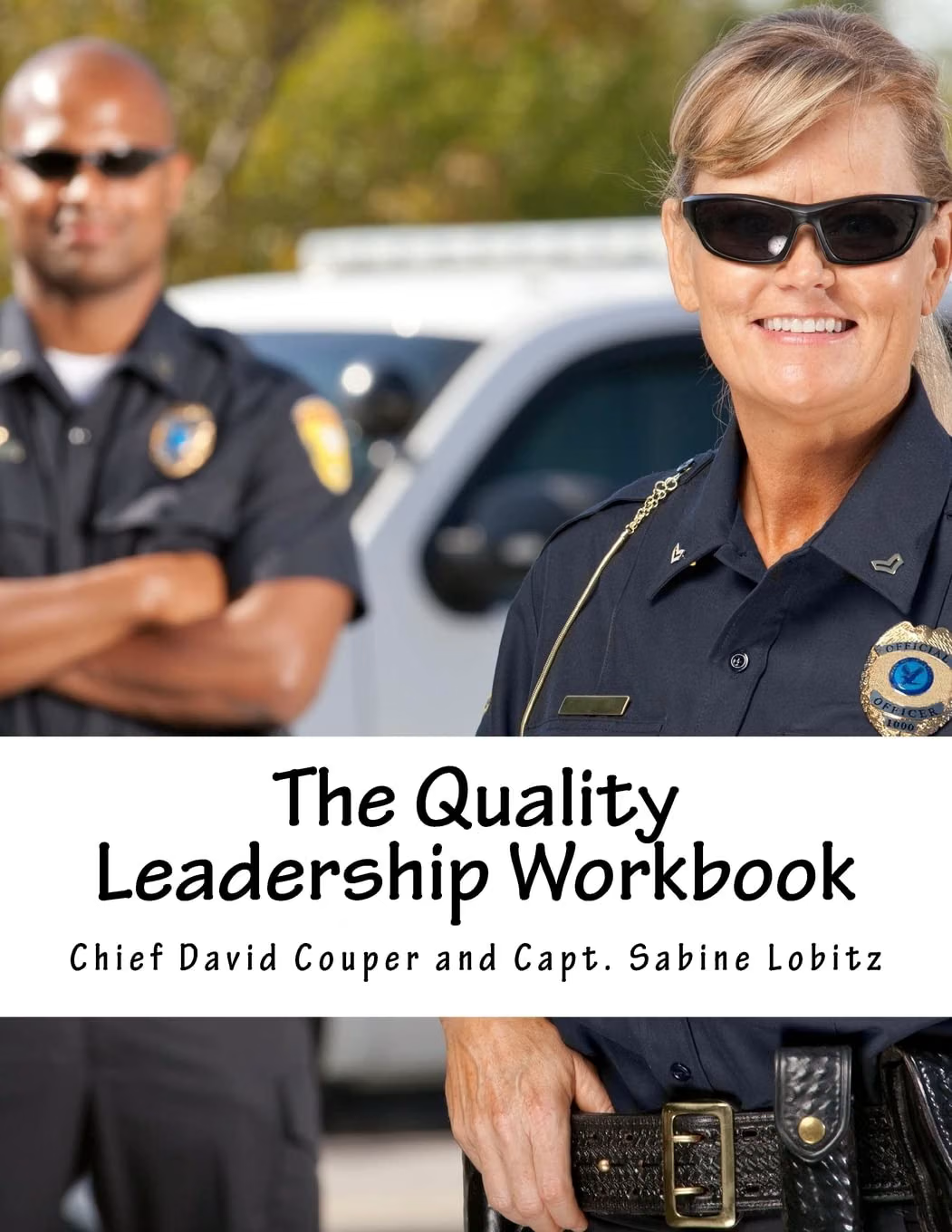
The New Quality Leadership Workbook for Police: Leadership and Improvement Methods
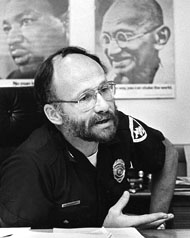
This workbook grew out of necessity, not theory. In the 1980s, Sabine Lobitz and I developed it as a practical teaching tool for leaders inside the Madison Police Department during a period of sweeping organizational transformation — the same transformation that turned Madison into a national model for community-oriented policing. Rather than a memoir or a work of commentary, the book is a hands-on curriculum: a structured guide meant to be used, not just read.
Its central premise is that quality policing has to be built from the inside out. Before an agency can change how it serves its community, its leaders and officers need to do the internal work first — clarifying core values, building emotional intelligence, and practicing procedural justice. The workbook walks readers through identifying core values, developing a bold vision, working effectively in teams, leading organizational change, measuring success, and sustaining improvements over time — the full arc of what it takes to become a better leader and know what to do, and when to do it.
We later used the workbook nationally, teaching “Quality Leadership” to police agencies across the country on behalf of the International Association of Chiefs of Police (IACP). It was revised and expanded in 2014, and again after Couper taught a leadership course at the University of Wisconsin–Platteville, keeping its material current for today’s police leaders, officers aspiring to formal leadership roles, and criminal justice students alike. Boise Police Chief Mike Masterson contributed a section drawing parallels between contemporary leadership models and Quality Leadership principles.
Grounded in decades of real organizational change rather than abstract theory, the workbook remains a practical toolkit — as relevant to a 21st-century department as it was to Madison’s transformation in the 1980s.
You can purchase the book HERE.


