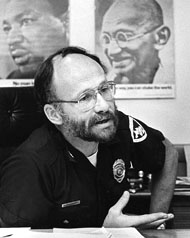
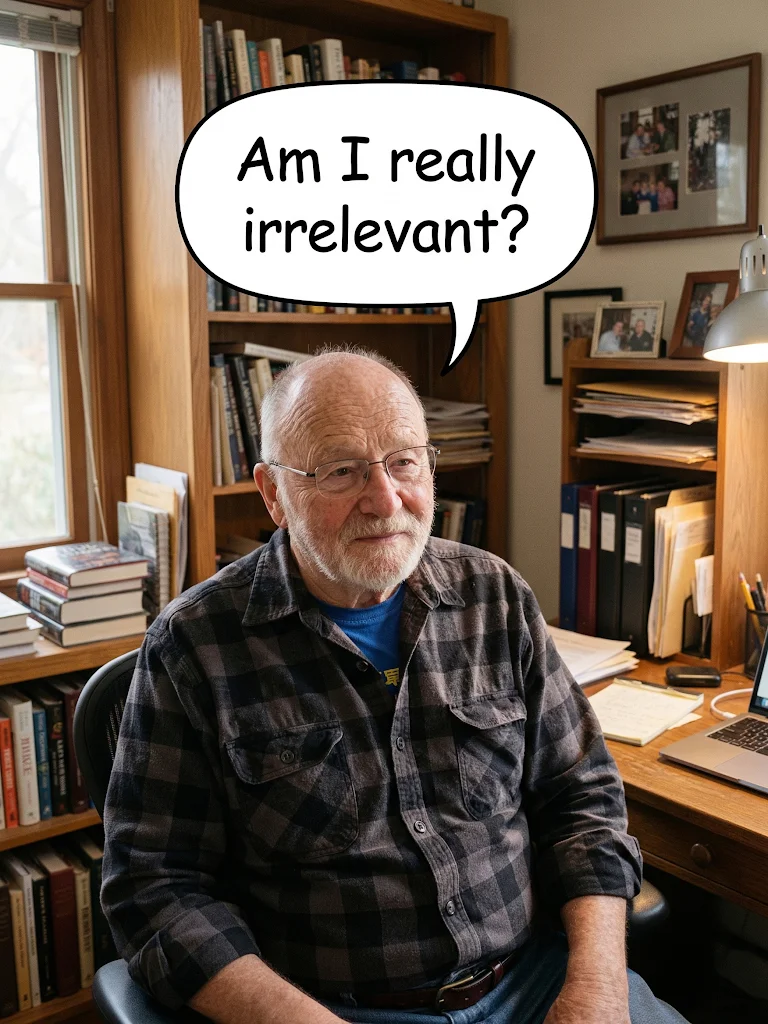
A veteran police officer recently told a friend of mine that, to him, I was, “irrelevant.”
He also knows my record: thirty-three years in policing, two books on the subject, years of lecturing and teaching, and half a century of serving in and watching American police. Still, in his eyes, none of it matters today. Did he really think that nothing I had learned along the way would be of help to him?
I’ve thought about that word—irrelevant. I respect his service, and I take him seriously. That’s why I won’t let it stand unanswered. His dismissal reflects something I identified years ago as one of the “four obstacles” to police improvement: anti-intellectualism. By that I mean a distrust of education, research and careful reasoning in favor of gut instinct and tradition. In policing, it shows up as the belief that the street is the only real teacher, and that college, research and outside ideas count for little. It still lingers strongly within the police subculture.
Let’s be honest about the difference
Within the policing subculture, I understand why he might think of me as being “irrelevant.” I first put on a badge in 1960 and took it off in 1993. But let’s be honest about the difference. When I served, violent crime was roughly twice what it is today, and officers were killed on duty at far higher rates. The streets are safer now. And police today are better trained and educated than my colleagues were in the 1960s. We carried six-shot revolvers and had no personal radios, ballistic vests or body cameras.
What has changed, however, is the scrutiny, the politics, and the loss of public trust. Those are exactly the problems I have spent fifty years workin on and writing about.
What really is different today
Today’s officer works under constant observation from body cameras, cell phones and social media. A single encounter can become national news by evening. Many departments are short-staffed, so officers race from call to call with little time to know the people they serve. Policing has become a political weapon, praised by one side and condemned by the other. Now federal immigration agents are pulling local police into conflict with their own communities.
These pressures are real, and I don’t make light of them. But they share one thing: none of them is solved by more force. Every one of them is a problem of trust and over the years I have focused on accountability, openness and neighborhood-oriented policing to address those current problems.
Which idea is irrelevant?
So I’d ask the officer a direct question: which of my ideas no longer apply? Which are irrelevant?
Is it that police should value every human life and use deadly force only when truly necessary? That officers should be highly educated, and that women and people of color belong in every rank? That we should listen to the people we serve, and to the officers who do the work? That protest should be protected, not crushed? That a department should learn from its mistakes instead of hiding them?
If any of those is wrong, I want to hear why. If none of them is, then the ideas aren’t irrelevant. They’re unfinished. So why do they seem irrelevant to him?
Why my ideas seem “irrelevant”
I suspect this officer has heard community policing and peacekeeping dismissed as soft, naïve or a luxury for quiet times. Perhaps he was trained to see every encounter as a threat and every citizen as someone to be controlled. Perhaps he has only seen community policing done badly, as a slogan or a special unit, never as the way an entire department thinks and works.
But these ideas weren’t born in a seminar room. They were tested in a city of protest and turmoil. We hired educated officers and many women. We listened to citizens and to our own officers. We protected protest instead of crushing it. Tension went down. Slowly, trust went up. It took two decades.
In an age of cameras and suspicion, the officer who can talk, listen and calm a situation is not a relic. That officer is the future. The officer who can only command and control will spend a career in conflict and leave behind a community that no longer trusts its police.
Being newer doesn’t make an idea right. Being older doesn’t make it wrong. The only question that matters is whether it works and whether it is worthy of a free and diverse people.
An invitation
So, if you also consider me and my ideas to be “irrelevant,” I’m not asking you to agree with me. I’m asking you to talk and engage with me. Tell me what I’m missing about policing today, and I’ll tell you what history has taught me. We both want the same thing: a police service worthy of what we, as Americans, hold true.
And that conversation is never irrelevant.


Excellent! Wisdom not irrelevance. You might find this of interest Frederick County Sheriff-Elect wants to end relationship with ICE | WYPR https://www.wypr.org/wypr-news/2026-11-23/frederick-county-sheriff-elect-wants-to-end-relationship-with-ice?fbclid=IwY2xjawV37wNleHRuA2FlbQIxMQBwZG9mAWJyaWQRMVIwT3Y0OHJQNm5XTUE4OUJzcnRjBmFwcF9pZBAyMjIwMzkxNzg4MjAwODkyAAEfknpD4Jv-hMzlwzZna4ftC6z51pHtHaNvFRaVOA7VxFH6BzKRlX_zbfqOr1c_aem_XrfpX7ckDvQna8uPrTqOgQ Have a great day and please keep up the good work. Karl Karl W. Bickel (301) 639-9665 KarlBickel@comcast.net mailto:KarlBickel@comcast.net
>
LikeLike
Thanks, Karl! Will check it out. Much needed!
LikeLike
Karl, congratulations on your election— wow! Way to go!!
LikeLike